Why Ireland's €3.9m EV Grant Scandal Points to a Bigger Public Procurement Problem
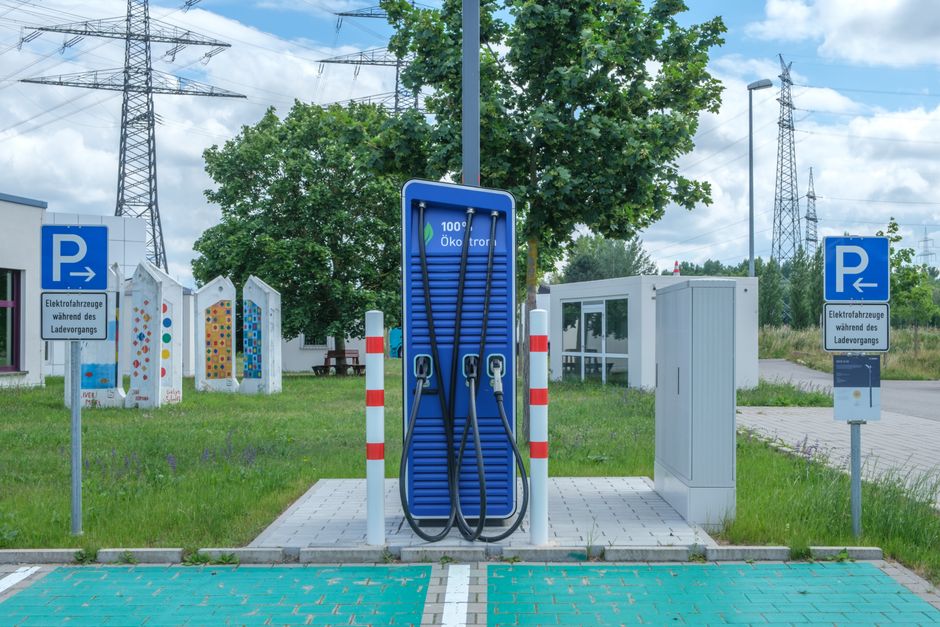
Public money disappears slowly, then all at once. The €3.9 million in electric vehicle grant overpayments made to a single Dublin dealership is not a rogue event. It is what happens when procurement systems are built on trust instead of verification, and when no single person in a government agency is accountable for the gap between what was claimed and what was real.
The Sustainable Energy Authority of Ireland confirmed the overpayments after a dealership submitted claims that did not match actual sales. The figure, €3.9 million, is roughly what it costs to build 13 social housing units in Dublin at current tender prices. It left the public sector not through fraud by a shadowy actor, but through a process that approved payments before checking whether the underlying transactions were legitimate. That is the failure worth examining.
The Procurement Gap Is Not Unique to EV Grants
This is the pattern, repeated across Irish public procurement, that nobody senior enough wants to own. A grant scheme launches. The application form is approved internally. Payments are processed on the basis of submitted documents. Verification, if it happens at all, comes months later as an audit rather than a control. By then the money is gone.
The SEAI scheme was not badly designed by accident. It was designed for speed, because the political priority was EV adoption numbers, not payment integrity. The two goals were treated as compatible. They are not. When you optimise a grant scheme for volume, you create the conditions for overpayment. Every additional manual check slows the pipeline. So checks get removed. So money flows faster. So someone, eventually, claims more than they are owed.
The Office of Government Procurement handles contracts worth roughly €12 billion per year across the Irish public sector. The Comptroller and Auditor General's annual reports consistently identify the same weaknesses, incomplete documentation, payments without adequate verification, contracts extended without fresh tender. The EV overpayment is the same structural problem wearing a green coat.
A Three-Stage Failure Model
Understanding why this keeps happening requires looking at the three moments where the system could have caught the error and did not.
Stage 1: Design. Grant schemes are designed by policy people whose job is to get the scheme approved and launched, not to stress-test the claims process against determined overclaiming. The SEAI EV grant did not build in real-time cross-referencing between dealership claims and vehicle registration data held by the Department of Transport. Those two databases exist. They were not connected at the point of payment. That is a design choice, and it cost €3.9 million.
Stage 2: Processing. Payments were approved by staff working from submitted documentation. If the documents looked right, the payment went out. The employee processing the claim had no practical way to verify the underlying transaction and no incentive to slow down a scheme with political visibility. Accountability was diffuse, meaning it belonged to everyone and therefore to no one.
Stage 3: Recovery. Once the overpayment was identified, the state entered recovery mode. This is where the Help to Buy scandal shows a familiar trajectory. Revenue spent years clawing back €2 million from first-time buyers who had misused that scheme. Recovery is expensive, slow, and often incomplete. The state recovers cents on the euro compared to what it would have cost to prevent the outflow in the first place.
The Accountability Architecture Is Broken
Ireland has plenty of oversight bodies. The Comptroller and Auditor General, the Public Accounts Committee, the SEAI itself, the Office of Government Procurement. What it lacks is a procurement culture where individual civil servants carry named, measurable accountability for payment accuracy. The public sector employee who approved the overpayments faces no personal consequence. The system produced the error, and the system absorbs the blame. That is not accountability. That is insulation.
In any private business that runs a payment process, someone owns the reconciliation. A finance director at a company processing dealer payments would lose their job if €3.9 million left the building without matching invoices. The public sector equivalent of that role exists on an organogram but not in practice.
The comparison to the private sector is not unfair. It is the correct one. When the state acts as a buyer or a grant-maker, it is operating a commercial process. Commercial processes require commercial controls. A government department is not exempt from the logic that applies to every accounts payable function in every business in the country.
What a Better System Looks Like
The fix is not complicated. It is just unglamorous, and unglamorous things rarely survive the political priority queue.
A procurement system that actually works requires three things, in this order, because the order matters. First, payment eligibility must be verified against a second independent data source before money moves, not after. For EV grants, that means cross-referencing the Vehicle Registration Tax records held by Revenue with the SEAI claim before approval. Second, individual civil servants must be named as payment authorising officers with personal accountability for verification steps. Third, post-payment audits must be random, rapid, and reported publicly within six months of payment, not buried in an annual report two years later.
None of this is radical. It is how every well-run accounts payable function operates. The state applies this logic to multi-million-euro capital contracts. It has consistently failed to apply it to grant schemes, where the individual transaction is smaller but the aggregate exposure is enormous.
The solar panel bid-rigging raids earlier this year pointed at the same underlying problem from a different angle. When procurement controls are weak, the market learns that quickly. The response, whether overclaiming or collusion, follows the incentive.
The Bigger Number Is the One We Cannot See
€3.9 million is what was caught. The question nobody in Leinster House has answered is what the uncaught figure looks like across every active grant scheme the state currently operates. The SEAI alone administers retrofit grants, solar grants, community energy grants, and heat pump supports alongside EV incentives. The Department of Agriculture runs over 30 separate schemes. Enterprise Ireland managed €1.5 billion in client company supports last year.
If the EV scheme ran for years before anyone noticed a single dealership overclaiming at this scale, the rational inference is that the problem is not isolated. The irrational response is to treat this as an anomaly, close the file, and leave the architecture that produced it intact.
Ireland is good at building institutions and poor at building the operational discipline that makes them work. That is not a criticism aimed at individuals in the public service, many of whom do careful work under genuine resource pressure. It is a structural observation about how Irish public procurement has evolved, where the political reward goes to launching schemes and the political cost of tightening controls always seems to outweigh the benefit.
The €3.9 million is recoverable, perhaps. The habit of designing payment systems without verification controls is the liability that compounds.