The Dairy Processing Bet: How Budget 2027 Water Quality Rules Are Reshaping Factory Expansion Plans
Compliance is not a cost centre. For Irish dairy processors, it is the most consequential capital allocation decision of the decade.
Budget 2027 has put water quality regulations at the centre of agri-food planning in a way that no previous budget managed. The rules are not proposals or consultations. They are dated, costed, and enforceable. Processors who treat the 2028 deadline as a distant policy problem will find themselves running non-compliant facilities at exactly the moment competitors have locked in operating licences, expanded capacity, and started signing long-term supply contracts. The window to build advantage is open right now. It will not stay open.
What Budget 2027 Actually Changed
The core shift is straightforward. Effluent discharge standards for dairy processing facilities have tightened significantly, with limits on biological oxygen demand, nitrogen, and phosphorus all moving in the direction of stricter thresholds. The Environmental Protection Agency has signalled that licence renewals from 2028 will be conditional on demonstrated compliance, not promised roadmaps. That is a different enforcement posture than Irish processors have dealt with before.
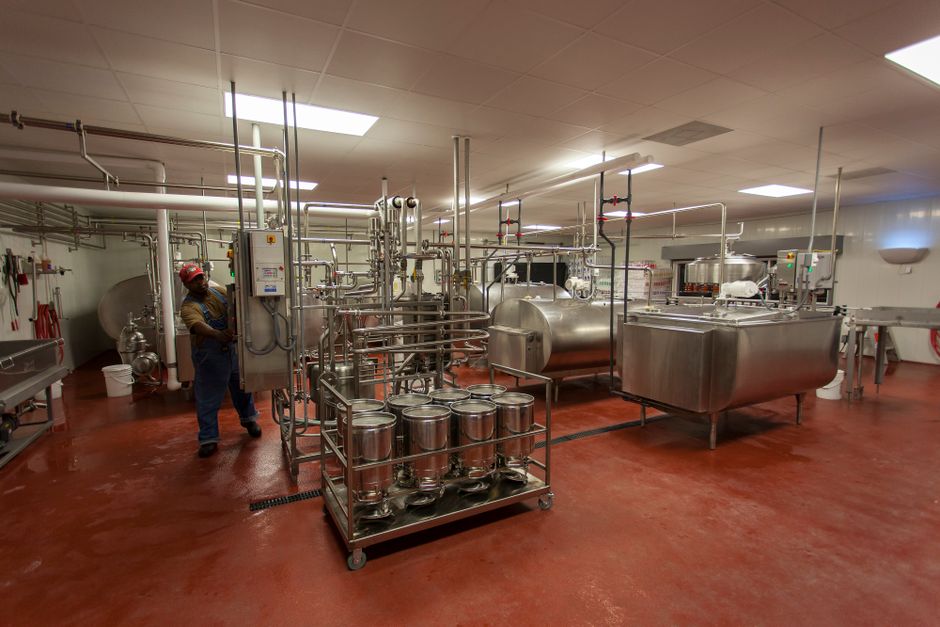
The figures involved are not trivial. Industry estimates put the cost of full wastewater treatment upgrades for a mid-sized creamery at between €3 million and €8 million, depending on throughput and existing infrastructure. For a processor handling 500 million litres of milk per year, that upgrade cost is roughly one cent per litre processed over a ten-year depreciation period. Put another way, it is about the same as a single bad cheese yield loss event. The investment is manageable. The question is who moves first and who waits.
The First-Mover Logic in Dairy Processing
Speed here is not about being reckless with capital. It is about understanding how regulatory deadlines create a predictable scarcity. When everyone must comply by 2028, demand for specialist contractors, environmental engineers, and processing equipment suppliers will spike in 2026 and 2027. Firms that commission design work in 2025 will pay 2025 prices and get first pick of the best contractors. Firms that begin procurement in 2027 will queue behind everyone else and pay the premium that comes with it.
Glanbia is the clearest case study in this logic. Protein, pharma, and resilience: how Glanbia stayed profitable while tech companies panicked is a story partly built on exactly this kind of infrastructure discipline, investing ahead of regulatory and market shifts rather than reacting to them. The cooperative structure that sometimes slows decision-making actually helped here, because long-term capital planning is baked into how those boards think.
Smaller processors face a different challenge. The same upgrade that costs Glanbia one line item in a capital budget can represent a year's profit for a regional creamery processing 50 million litres. For those operators, the choice is not between moving fast and moving slow. It is between finding the financing now or selling the facility to a larger processor in 2027 when the compliance gap becomes a valuation discount.
A Four-Step Framework for Planning Compliance Capital
The order of these steps matters. Skipping to step three without completing step two is how facilities end up with beautiful treatment plants that do not meet their specific licence conditions.
Step 1: Audit current discharge performance against the new thresholds. Not against the old licence. Against the new standards. Many processors are compliant today and non-compliant under the revised rules. Knowing the gap precisely is the starting point for everything else.
Step 2: Commission a site-specific engineering assessment. Generic industry costings are useful for budgeting conversations but worthless for procurement. Every site has different constraints, existing infrastructure, and discharge points. The engineering assessment is what turns a budget estimate into a capital request that a bank or cooperative board will actually approve.
Step 3: Secure financing before 2026. The Strategic Banking Corporation of Ireland has specific agri-food lending facilities, and the European Investment Bank has been channelling green infrastructure capital through Irish banks at rates that reflect the environmental policy priority. Those rates will not get better as the deadline gets closer. They may get worse as demand for the same capital increases.
Step 4: Run compliance and expansion planning together. This is where most processors leave money on the floor. A wastewater treatment upgrade that is designed only to meet the minimum standard is an asset that depreciates immediately. A treatment plant designed with twenty percent headroom capacity is an asset that enables future throughput growth without a second planning application. The incremental cost of that headroom is small. The strategic value is significant.
The Fear Side of This Argument
The opportunity is real. So is the downside of moving without thinking. Water quality regulations in an Irish context interact with planning permissions, land use, and local authority relationships in ways that are genuinely complex. A processor that rushes procurement, picks the wrong engineering contractor, and builds a treatment facility that fails to meet EPA standards on commissioning has spent the capital and bought nothing except a legal problem.
One Irish water quality company using AI to solve Europe's nitrogen problem illustrates a broader point: the technical challenge in nutrient removal from dairy effluent is not trivial, and off-the-shelf solutions often perform differently on actual creamery wastewater than they do on a manufacturer's specification sheet. Due diligence on technology selection is not bureaucratic caution. It is the difference between a compliant facility and a costly retrofit three years after commissioning.
The Consolidation Signal
Watch the acquisition market. The compliance cost gap between large processors and small ones is about to become a consolidation driver in a way that efficiency arguments alone never achieved. A regional creamery that cannot finance a €5 million wastewater upgrade will find its valuation conversation changing rapidly when a larger processor can offer to absorb both the facility and the compliance problem as part of a deal structure.
For farmers supplying those regional creameries, that is not an abstract concern. Supply contracts, milk price premiums, and cooperative dividends all sit downstream of whether the processing facility maintains its operating licence. The water quality rules are an agri-food infrastructure issue, not just a factory problem.
The Irish dairy sector processes roughly 10 billion litres of milk per year. That is enough to fill Croke Park thirty times over. The infrastructure question being decided right now is who will be processing that volume in 2030, under what licence conditions, and with what capacity to grow.
The processors who move in the next eighteen months will answer that question on their own terms. The ones who wait will have it answered for them.