The Solar Panel Bid-Rigging Raids Signal a Bigger Problem: How Much Is Ireland Actually Losing to Market Collusion?
Collusion isn't a victimless crime. Every time competitors fix prices in a sector that Irish businesses and households depend on, the loss lands somewhere real: on the invoice, on the timeline, on the national target we told the EU we would hit.
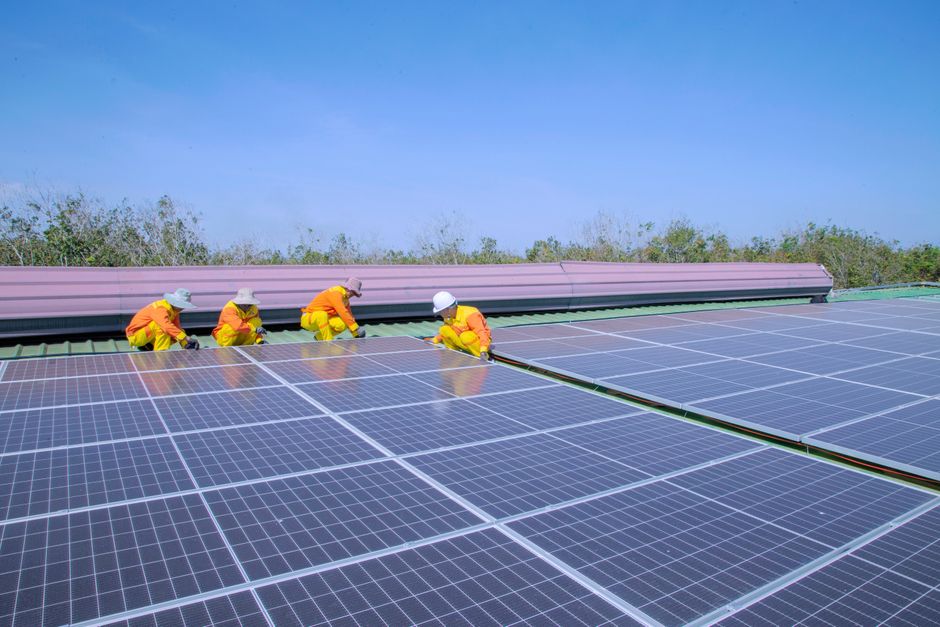
The Competition and Consumer Protection Commission's dawn raids on solar panel installation companies are the kind of event that generates a news cycle and then disappears. That would be a mistake. This investigation, which centres on suspected bid-rigging in tenders for solar photovoltaic installation contracts, is not an outlier. It is a symptom of what happens when a sector scales fast, attracts public subsidy, and operates without robust competitive discipline. Green energy in Ireland has all three conditions in place right now, and the CCPC's investigators arriving at company premises at 7am tells you the watchdog knows it.
What Bid-Rigging Actually Costs
Bid-rigging is simple in operation. Competitors agree in advance who will win a tender. The losers submit inflated quotes to make the agreed winner look competitive. The buyer, in this case often a business, a local authority, or a grant-assisted homeowner, pays a price that has no relationship to what the market would actually deliver. The European Commission estimates that cartels add between 10% and 20% to the price of affected goods and services. Apply that range to Ireland's €3bn solar installation boom and you are talking about between €300m and €600m in overcharges, not over a decade, but over the build-out cycle that is happening right now.
For a business putting solar on a warehouse roof in Tullamore or a cold-store facility in Kilkenny, the consequence is a payback period that stretches from seven years to ten. The business case for the investment weakens. Some installations don't proceed. The transition slows.
The Green Subsidy Multiplier
State money makes collusion more attractive, not less. When the Sustainable Energy Authority of Ireland provides grants for solar installation, the effective demand for that work becomes partially inelastic. Buyers who have secured grant approval are motivated to complete the project regardless of quote levels. They have already committed administratively. That creates exactly the kind of captive buyer that cartel participants love. The subsidy designed to accelerate deployment becomes a mechanism that inflates contractor margins and reduces the number of installations the same public money can fund.
This is the real policy cost. It is not just that businesses overpay. It is that the state's climate investment delivers fewer units of installed capacity per euro than it should. Ireland has a binding target of 80% renewable electricity by 2030. The CSO's own energy statistics show we are currently around 40% of the way to that on solar capacity. Bid-rigging in installation markets does not just cost money. It costs years.
Why Green Energy Is a Collusion Risk by Design
Three structural factors make renewable energy procurement vulnerable to anti-competitive behaviour, and they operate in a specific sequence.
Step 1: Rapid market formation. When a sector grows from near-zero to billions in contracted value inside five years, established competitors know each other well. They tender against the same firms repeatedly. Relationships form. The temptation to manage competition rather than face it is highest in markets where the same small group of players meets on every job.
Step 2: Technical complexity creates information asymmetry. A building manager commissioning a solar array cannot easily assess whether three quotes represent genuine competition or a choreographed result. The product is specialist. The buyer is dependent on the seller to frame what is reasonable. That dependency is the operating environment that bid-rigging requires.
Step 3: Public procurement adds rigidity. Tender processes in public bodies are rules-based. Once submitted, quotes are locked. A rigged tender exploits the procedural integrity of the system, using its transparency requirements as cover rather than as a check. The CCPC's focus on installation contracts suggests this is precisely the channel under investigation.
The order matters. Rapid growth creates the relationships, technical complexity creates the cover, and public procurement creates the mechanism. Remove any one of those and the risk drops. Ireland currently has all three running simultaneously across wind, solar, and retrofit markets.
What the CCPC Can and Cannot Do
The CCPC has real teeth. It can impose fines of up to 10% of turnover on companies found to have breached competition law. It can refer individuals for criminal prosecution. Dawn raids, where investigators arrive unannounced to seize documents and digital records before they can be destroyed, are a serious escalation from a desk-based inquiry. The fact that raids have occurred means the commission has already formed a reasonable belief that evidence of wrongdoing exists and could be concealed.
What the CCPC cannot do is undo past overcharges already absorbed by businesses and public bodies. It cannot recover the installations that were not built because the economics were artificially damaged. And it cannot, on its own, change the structural conditions that made collusion attractive in the first place. Enforcement is necessary. It is not sufficient.
The green energy investment picture in Ireland already carries enough uncertainty without contractors manipulating the market on top of it. Procurement bodies need to treat repeated patterns of bidding, where the same firm always wins against the same set of competitors at suspiciously similar margins, as a red flag worth escalating. That is not a legal determination. It is basic commercial vigilance.
The Posture Irish Business Needs
The entrepreneur's response to this situation is not to wait for the regulator. It is to build procurement practices that make collusion harder to sustain. That means four concrete steps, in order.
1. Widen the tender pool. Irish solar installation has a relatively small number of established large contractors. Actively sourcing quotes from smaller regional firms and newer entrants changes the competitive dynamic. A cartel that cannot predict who will quote cannot reliably rig the outcome.
2. Benchmark against European comparators. Solar installation costs in Germany and the Netherlands are publicly available. An Irish business paying 25% above German rates for comparable installations on comparable roof types should ask why before signing.
3. Separate design from installation. Engaging an independent engineer to specify the system before going to market for installation quotes removes one layer of information asymmetry. The buyer enters the tender process knowing what they need, not dependent on the installer to define it.
4. Report anomalies. The CCPC's dawn raids did not happen without prior intelligence. Businesses that see suspicious bidding patterns have a reporting channel. Using it is not a commercial risk. Staying silent while paying inflated prices is.
Collusion thrives on silence and complexity. Both are choices. A market that is building Ireland's energy future deserves better than the version of competition that raiders arriving at dawn apparently found.