When the Bag Drop Closes: How Travel-Dependent Irish SMEs Are Reshaping Their Logistics
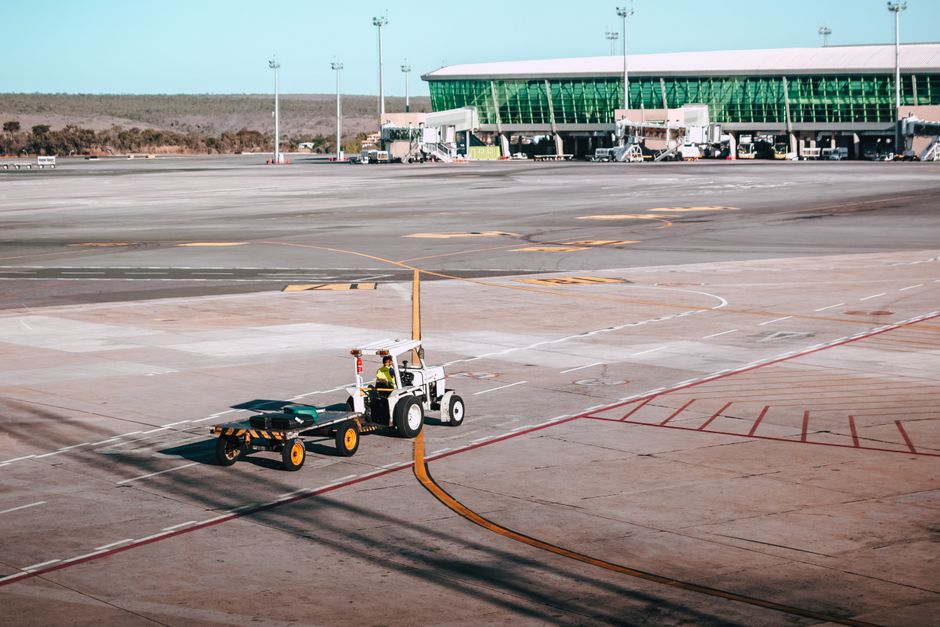
The bag drop closes sixty minutes before departure. That rule, enforced without exception by Ryanair at every Irish airport it serves, has become the most consequential deadline in Irish hospitality logistics that nobody in a boardroom is talking about.
The Rule Is the Constraint
Just-in-time delivery works on one premise: the window between production and consumption is predictable. For a Kerry food supplier getting artisan goods onto a Ryanair route to Faro for a resort client, or a Dublin event planner moving branded merchandise to a conference in Seville, that window just shrank. Ryanair's bag drop policy means a courier, a sales rep, or an operations manager carrying goods as hold luggage has a hard stop an hour before wheels up. Miss it and the goods wait for the next flight, often a full day later. A day in hospitality logistics is not a scheduling inconvenience. It is a missed event, a hotel opening without its collateral, or a tour group without its printed itineraries.
The math is unforgiving. If your flight is at 07:00 from Dublin, bag drop closes at 06:00. Factor in the time to clear security and you need to be kerb-side at Dublin Airport by 05:30 at the latest. That means a 04:30 departure from, say, a production unit in Naas. A supplier who previously planned around a 06:00 finish on a packaging run now needs to finish by midnight or push the goods to cargo, which is a different cost structure entirely.
What This Is Actually Costing Irish SMEs
The visible cost is easy to calculate: overnight courier rates versus checked-luggage rates. Ryanair charges between €10 and €30 per hold bag on domestic European routes. A dedicated cargo shipment for the same weight on the same route can run ten times that, and that is before customs documentation for goods moving to non-EU destinations becomes a factor post-Brexit on UK routes.
The invisible cost is harder to see on a P&L but more damaging over a year. It sits in three places.
1. Buffer stock and double-ordering. Suppliers who cannot guarantee same-day or next-day delivery by air are building in safety stock at the destination end. For a tour operator supplying twenty resorts across Spain and Portugal, holding an extra two weeks of printed materials, branded amenity kits, or event supplies at each location is not a logistics choice. It is working capital tied up in inventory rather than generating return.
2. Relationship and contract risk. Hotel groups and resort operators increasingly write delivery performance clauses into supplier contracts. A catering supplies SME in Cork that misses a delivery because its rep missed bag drop does not get to explain the Ryanair policy to the purchasing director in Mallorca. It gets a penalty deduction or a conversation about alternative suppliers.
3. Repricing pressure that goes in the wrong direction. Some SMEs are responding by discounting rather than restructuring. That is the wrong answer. Cheap is not a strategy when your problem is structural. A supplier who cuts margin to compensate for unreliable delivery has simply found a slower way to lose the contract.
The Four-Step Restructure
The operators who are handling this well have not found a workaround. They have rebuilt the model. There are four steps, and the order matters because each one removes a dependency before the next one can work.
Step 1: Audit every delivery that involves a person on a plane. Map exactly which goods move by checked luggage, which move by courier, and which move by cargo. Most SMEs doing this for the first time discover that the checked-luggage channel was used precisely because nobody had costed the alternatives properly. One Wicklow-based hospitality supplier recently found that 40% of its international deliveries were travelling in the hold bags of its own sales staff, effectively hiding the logistics cost inside the payroll line.
Step 2: Separate the goods from the people. Sales reps and operations staff should travel light. Goods should move through a dedicated logistics channel with its own cost code and its own service-level agreement. The two things travelling together was always a convenience, not a system. Once they are separated, you can optimise each independently.
Step 3: Build a regional consolidation point. For Irish SMEs supplying European hospitality markets, a small consolidation hub in Barcelona, Lisbon, or Malaga changes the economics entirely. Rather than shipping from Dublin to each individual property, you ship in bulk once a month to the hub and distribute locally from there. The bulk Dublin-to-hub shipment goes by cargo freight, not by Ryanair hold bag, and the local distribution is cheap and fast. This is not a new idea. It is what Dublin's logistics infrastructure is increasingly being built to support at the departure end.
Step 4: Price the real cost of delivery into every contract. The bag drop deadline is a forcing function that reveals the cost of logistics that was always there but was being absorbed informally. Once you know the real number, you can either charge for it or redesign around it. You cannot manage what you have hidden inside someone else's budget line.
The Opportunity in the Constraint
Every constraint in a supply chain creates a gap between operators who adapt and operators who absorb the cost and complain. The 60-minute bag drop deadline is creating a gap between Irish SMEs who have a real logistics model and those who have a habit dressed up as a system.
The hospitality suppliers and tour operators who come out of this better will be the ones who treated the deadline as a design brief rather than an obstacle. They will have lower working capital tied up in buffer stock, cleaner contracts with delivery terms they can actually meet, and a cost structure that does not hide logistics inside salary costs or client relationships.
The close of the bag drop is not a problem Ryanair is going to solve for you. Build the system that does not need them to.