Dublin's Logistics Boom: Why Robots Are Now Competing for Warehouse Jobs Faster Than Expected
You can create 200 jobs and replace hundreds of others in the same building on the same day. DPD's €10 million expansion at its Dublin depot is proof that these two things are no longer contradictory. They are the new normal in Irish logistics.
What DPD Actually Built
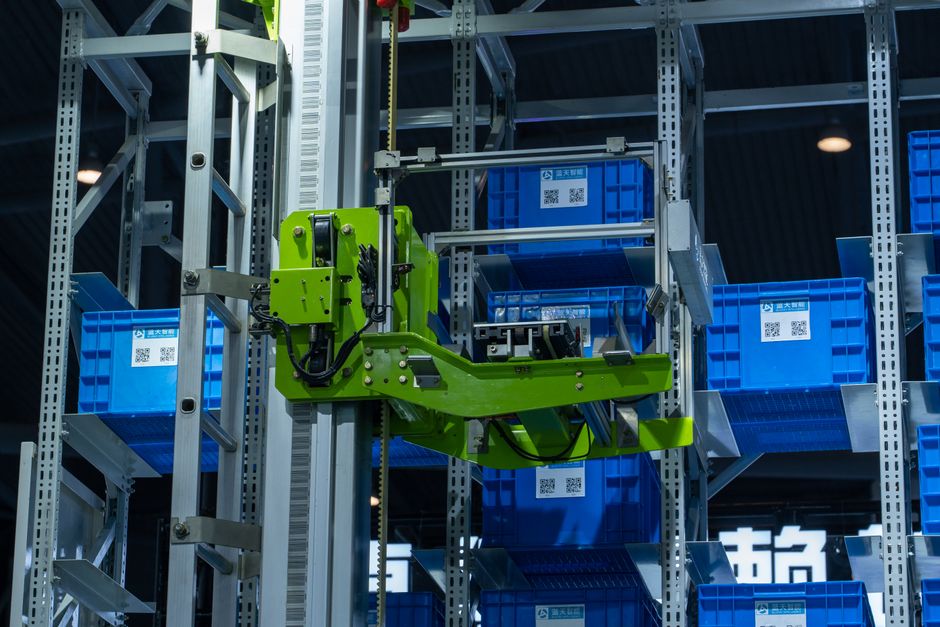
The headline number is 200 new roles. The quieter number, buried a few paragraphs down in most coverage, is 270 robots now operating inside the same facility. Those robots do not take breaks, do not need overtime rates on a Sunday night before Christmas, and do not phone in sick in January. They sort parcels at a rate no human team could match without tripling headcount.
To picture the scale: 270 robots in one Dublin warehouse is roughly one machine for every person DPD just hired. That ratio is not a rounding error. It is the business model.
DPD processed over 30 million parcels in Ireland last year. E-commerce has turned next-day delivery from a premium into a baseline expectation, and that volume is still growing. The infrastructure required to keep that promise at scale is not a bigger staff canteen and more forklifts. It is automated sorting lines, conveyor systems, and robotic arms that can handle a thousand SKUs an hour without a supervisor.
The Paradox That Is Not Actually a Paradox
The instinct is to read this as a jobs-versus-robots story. That frame is too simple and it leads to bad conclusions.
The accurate frame is this: automation handles volume, humans handle complexity. The 200 roles DPD is filling are not the roles the robots replaced. They are roles the robots created or freed up capacity to support. Fleet operations, tech maintenance, customer resolution, route optimisation, compliance. These are jobs that require judgment, not just repetition. The robot sorts the parcel. The human decides what happens when the parcel is wrong, late, or lost.
The fear is real, though, and it deserves a straight answer. Warehouse operatives doing pure pick-and-sort work at entry level are facing a shrinking market. Not gone yet, but shrinking. The CSO's own figures show logistics and transport employment in Ireland grew between 2019 and 2023, even as automation investment accelerated. That growth will not continue at the same rate once the next wave of robotic sorting systems comes online across the sector. The jobs being created now require more skill than the jobs being automated away. That gap is the real problem, and nobody in the industry is being fully honest about it.
Three Forces Driving the Automation Curve
Understanding why this is happening faster than most people expected means looking at three converging pressures.
1. Labour costs in Dublin are no longer competitive for repetitive work. A warehouse operative in Dublin costs an employer somewhere between €32,000 and €40,000 a year including PRSI and overhead. A robotic sorting unit amortised over five years costs a fraction of that per unit of throughput. The maths tipped in favour of automation when Irish wages rose and interest rates made financing capital investment cheaper than carrying a large payroll.
2. Consumer expectations are a one-way ratchet. Nobody is going back to waiting five days for a delivery. Same-day and next-day fulfilment at national scale is only possible with automated sortation. The human alternative involves a warehouse staff count that no Irish logistics operator can recruit for, house, or retain in the current market.
3. The robots got cheaper and smarter at the same time. Five years ago, the robotic systems DPD is now deploying cost roughly twice what they cost today in real terms. Computer vision, better sensor arrays, and cheaper manufacturing have pulled the price down while pushing capability up. This is the same dynamic reshaping Ireland's technology employment more broadly, and logistics is simply the sector where it became visible first.
What Irish SMEs in the Supply Chain Should Do Now
If you are running a third-party logistics operation, a fulfilment business, or a courier service in Ireland, DPD's move is not a curiosity. It is a deadline.
Three steps, in order, because the order matters.
Step 1: Map your repeatable volume. Identify every task in your operation that follows a fixed rule more than 80% of the time. Sorting, scanning, labelling, basic picking. That is your automation candidate list. Do this before you look at any equipment, because buying tech without knowing what problem it solves is how SMEs waste capital.
Step 2: Cost your labour honestly. Most operators undercount the true cost of a warehouse employee by 25% to 30% because they exclude recruitment, training, supervision, and turnover. Run the real number, then compare it to a five-year lease on the appropriate system. The answer may surprise you.
Step 3: Invest in the roles automation cannot fill. Customer relationships, carrier negotiations, route intelligence, returns management. These are where Irish SMEs still have an edge over the large operators if they move fast enough to build the capability. Wait two more years and the large operators will have automated their way to a cost base the SME cannot touch.
The Turn
The DPD story is bullish for Irish logistics overall. More volume, more investment, more infrastructure. The €10 million going into one Dublin depot is one data point in a sector that is genuinely growing. That is the opportunity.
The honest caveat is that growth at the top of the sector does not automatically mean better outcomes for the people currently doing the work. The new jobs are real. They also require skills that today's entry-level warehouse workforce does not yet have. Solving that gap is not a robot problem. It is a training and policy problem, and nobody is moving fast enough on it.
Automation is not coming for Irish logistics. It has arrived, it has signed a lease in Dublin, and it is sorting 30 million parcels a year. The question now is whether Irish operators, workers, and policymakers treat that as a problem to manage or a platform to build on.
Build on it.