The infrastructure gold rush: How Ireland's semiconductor boom is reshaping regional tech employment
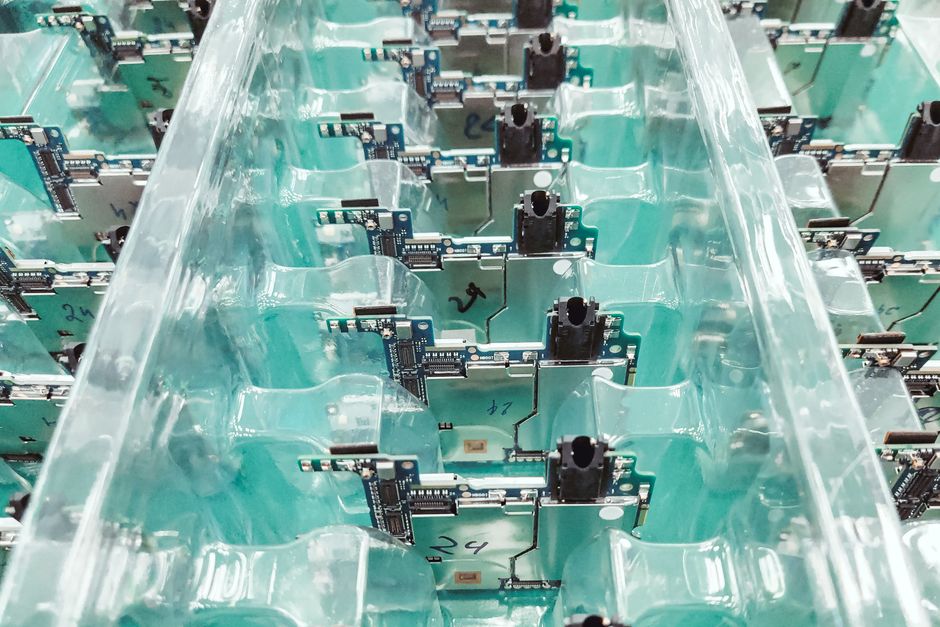
The real estate agent in Cork who starts getting calls from process engineers asking about three-bed semis in Ballincollig is not witnessing a lifestyle trend. She is watching the early signal of a structural shift in where Irish tech employment actually lives.
The €100 Million Bet on Deep Tech
The Irish government's €100 million commitment to expanding the Tyndall National Institute in Cork is not a research grant in the traditional sense. It is an infrastructure decision, the same category of choice as building a motorway or a port. Tyndall works on semiconductor design, photonics, and microelectronics. These are not software tools you run from a laptop in a co-working space in Ranelagh. They require cleanrooms, fabrication equipment, and the kind of capital expenditure that anchors an institution to a place for thirty years.
To put the number in context: €100 million is roughly what it costs to build and equip two large secondary schools, a district hospital outpatient unit, and still have change. Spent on a single research institute in Cork city, it signals that the state is treating semiconductor capability as critical national infrastructure, not a nice-to-have. The EU's own Chips Act, which targets doubling Europe's global semiconductor market share to 20 percent by 2030, is the demand signal sitting behind that investment. Ireland is positioning to catch part of that wave, and Tyndall is the anchor.
The Renewable Energy Hiring Wave
Tyndall is the headline, but the hiring is already happening across the country through a different channel. SE Systems, which designs and builds electrical infrastructure for renewable energy projects, announced 150 new roles spread across its national operations. These are not remote customer service positions. They are electrical engineers, project managers, and technical specialists tied to physical infrastructure being built in counties that do not normally appear in tech employment announcements.
This is the binary that matters: Dublin tech vs. regional tech. For twenty years, the default assumption was that serious tech employment meant the capital or, at a stretch, Cork city. The semiconductor and clean energy buildout is breaking that assumption because the assets themselves, wind farms, grid infrastructure, fabrication facilities, are not in Dublin 2.
The consequence runs in three directions at once.
Three Pressure Points: Property, Talent, and Local Services
1. Property moves before the jobs are even filled.
When a significant employer confirms 150 roles in a regional town, the property market in that town reprices within six to twelve months. This is not speculation. It is what happened in Limerick after the Troy Studios and IDA announcements, and what happened in Galway each time a medtech firm expanded its local headcount. Engineers on €60,000 to €80,000 base salaries are buyers, not renters, within two or three years. Local builders and developers who read the employment press and move early capture the margin. Those who wait for certainty find the sites already sold.
2. Talent follows infrastructure, not the other way around.
The standard model assumed you hired in Dublin because that was where the talent pool was. The Tyndall expansion inverts this. When you build a cleanroom and hire 200 researchers and technicians around it, you create the talent cluster. UCC's engineering faculty pipeline deepens. MTU Cork adds courses. Graduates stop defaulting to London or Amsterdam because the interesting work is ten minutes from where they studied. EU structural investment shaped this same dynamic in the 1990s, when the state used European money to build the physical and educational infrastructure that later attracted FDI. The logic is identical now, applied to a specific technology sector.
3. Local services face a demand surge they are not ready for.
A cluster of 300 to 500 new professional households in a regional town does not just need houses. It needs GP practices with capacity, creche places, decent broadband at the residential level, and restaurants that are open on a Tuesday. The towns that have invested in their service infrastructure, that have a functioning local chamber and a council that approves planning in months rather than years, will absorb the growth. The ones that have not will see employers struggle to retain staff who move back to Dublin after eighteen months because the quality of life outside work is not there.
What the Decentralisation Actually Requires
This is not the government decentralisation programme of the 2000s, which moved civil service bodies to provincial towns largely without strategic logic and left some of them underperforming for a decade. This is demand-led movement driven by where the physical assets are. That distinction matters because demand-led decentralisation is self-reinforcing. Build the fabrication facility, hire the engineers, and the surrounding economy adapts. Force the relocation without the underlying demand and you get resentment and a slow drain back to the capital.
The opportunity for regional businesses is straightforward. Specialist technical recruiters based outside Dublin. Facilities management companies that understand cleanroom environments. Housing developers with access to land near Tyndall or near SE Systems project sites. Professional services firms, accountancy, legal, financial planning, that want to become the default partner for a new professional class arriving in their area.
The risk is equally straightforward. If regional Ireland cannot house, educate, and service the people taking these jobs, the employers will either fail to hire or watch their hires leave. A semiconductor engineer who cannot get a mortgage approval because local property stock is too thin, or cannot get a creche place, is a semiconductor engineer working in Munich inside two years.
The Turn
Ireland has done this before. The Coca-Cola model of making it local applies here too: global capital investment only sticks when the local infrastructure is capable of supporting it. The semiconductor boom is real. The regional opportunity is real. Neither of them is automatic.
The regions that treat this as a planning problem, a housing problem, and a services problem simultaneously, rather than waiting for the jobs to arrive before they act, will own the next decade of Irish tech employment. The ones that treat it as someone else's job to sort out will be reading about it in the national press and wondering what happened.
Ireland's tech economy is decentralising whether Dublin's property market likes it or not. The question is whether the regions are ready to catch it.