Green Energy Megadeals Aren't Coming to Ireland Yet: Here's Why That's Changing
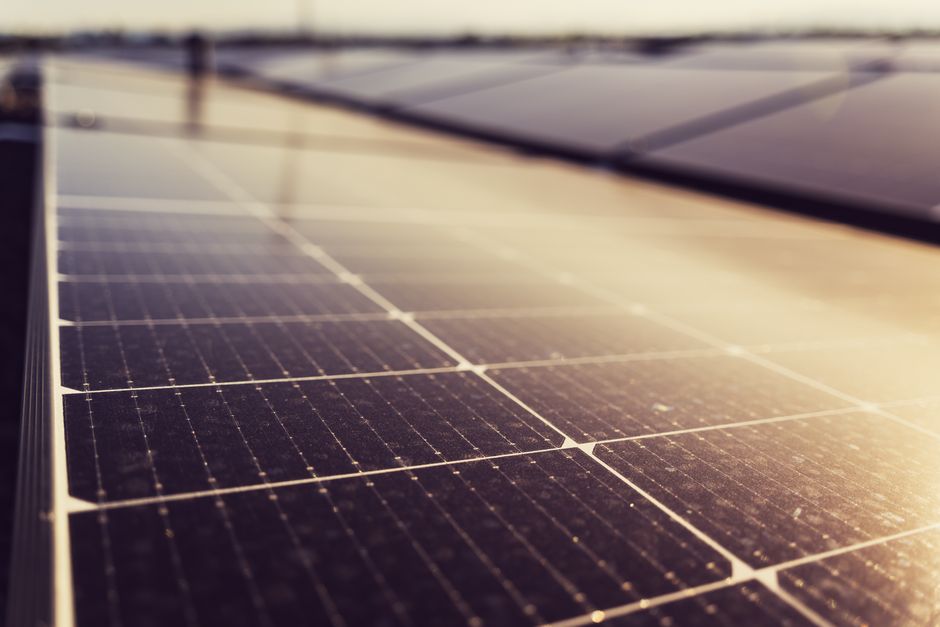
The money is moving. Not fast enough, not broadly enough, but it is moving. The approval and funding of Voltclub's 12MW solar farm marks something real: institutional capital is beginning to treat Irish renewable energy as an asset class rather than a charitable bet.
That matters because for most of the last decade, green energy investment in Ireland has been a story of potential that never quite arrived. The wind was there. The Atlantic coastline was there. The EU targets were there. What was missing was the conviction among serious investors that Ireland could convert natural advantage into bankable returns. Voltclub's deal suggests that conviction is arriving.
What 12MW Actually Means
Twelve megawatts sounds abstract. Put it this way: a well-run 12MW solar farm in Irish conditions generates roughly 10,000 to 12,000 MWh of electricity per year. That is enough to power around 2,800 Irish homes. It is not a giant project by European standards, where utility-scale solar routinely runs to 100MW or more. But in the Irish context, where planning friction, grid connection queues, and investor caution have kept projects small and slow, getting a 12MW farm funded and moving is a signal.
The signal is this: someone ran the numbers, liked the returns, and committed capital. That is the thing that changes markets.
Why Ireland Has Lagged
Ireland has been an underperformer in solar, which is almost impressive given how aggressively the EU has pushed renewable targets. The reasons stack up in a familiar way.
First, the planning system. A project that would take 18 months to approve in Denmark or Germany can spend four or five years in the Irish system. Ireland's infrastructure bottleneck is a documented funding problem, and energy projects feel it as directly as housing or transport.
Second, grid connection. EirGrid's connection queue has been a genuine constraint. Developers who secure planning permission can then wait years for a grid connection offer that makes financial sense. That delays cash flows, which kills investor appetite.
Third, scale. Ireland's land market and farm ownership patterns make assembling large contiguous sites difficult. You end up with smaller projects, which have higher per-unit development costs and less attractive economics for institutional investors who want to deploy tens of millions at a time, not a few million across a patchwork of sites.
The result has been a market that looked good on paper and performed poorly in practice. The €3bn solar boom is real at a macro level, but the underlying structural problems have meant smaller operators and SMEs captured very little of that capital flow.
What Is Actually Changing
Three things are shifting the equation, and the order matters.
1. Revenue certainty has improved. The Renewable Electricity Support Scheme, known as RESS, gave developers a state-backed price floor through competitive auctions. Investors who need predictable cash flows to model returns now have something to model against. Without that floor, renewable projects in Ireland were too dependent on volatile wholesale prices to attract conservative capital.
2. Corporate Power Purchase Agreements are becoming normal. Large Irish employers, data centres in particular, are signing long-term PPAs directly with generators. A 10 or 15-year PPA with a creditworthy corporate counterparty is as close to a government bond as a solar developer can get. That kind of offtake agreement transforms the risk profile of a project overnight. It turns a speculative energy play into something a pension fund or infrastructure vehicle can hold.
3. Interest rates are the wildcard. Infrastructure projects like solar farms are long-duration assets. When rates were near zero, the returns looked excellent relative to alternatives. As rates rose, the economics tightened. The deals that are getting done now are the ones with strong offtake, lean development costs, and patient capital behind them. Voltclub's 12MW deal fits that profile.
The SME Problem Nobody Wants to Name
Here is the honest part. The capital that is flowing into Irish renewable energy is not flowing to small businesses. It is flowing to developers with established track records, planning teams, grid consultants, and the balance sheets to survive a three-year development process before a single panel goes in the ground.
A small Irish business that wants to own its energy costs through an on-site solar installation is not competing for the same capital. It is looking at a completely different funding landscape: SEAI grants, asset finance from banks, leasing structures, or simply paying out of retained earnings. The megadeal market and the SME market are two separate conversations happening in the same room, and they barely interact.
This creates a producer versus consumer split that Irish business has not resolved. The businesses generating renewable energy and capturing investment returns are largely not the businesses consuming that energy and paying for it. The SME that puts 50kW on its factory roof is a consumer of solar finance, not a producer of investable energy infrastructure. The returns, the capital appreciation, the long-term asset ownership stay further up the chain.
What Smaller Operators Can Do
The honest answer is that the opportunity for most Irish businesses is not to build a solar farm. It is to buy the output cheaply enough that energy becomes a competitive advantage rather than a cost burden. That means negotiating PPAs where scale permits, joining collective purchasing schemes, or locking in fixed-rate energy contracts before wholesale prices move against you.
The businesses that will win in the next five years are the ones that treat energy as a strategic input, the same way they treat staff costs or raw material prices, not as a utility bill to be paid without question.
The Turn
The Voltclub deal is a data point, not a trend. One funded solar farm does not fix grid connection queues, compress planning timelines, or put capital in the hands of smaller developers. What it does is tell the next investor that someone else has already taken the first risk and it worked. That is how markets build confidence.
Ireland has the natural resource, the EU policy support, and now some demonstrated investor interest. The gap is execution at volume, and that requires the planning and grid systems to move faster than they currently do.
The opportunity is real. The infrastructure to capture it is still catching up. Back the operators who understand that gap and are building anyway.