The €3bn Solar Boom Is Hiding Ireland's Real Energy Problem
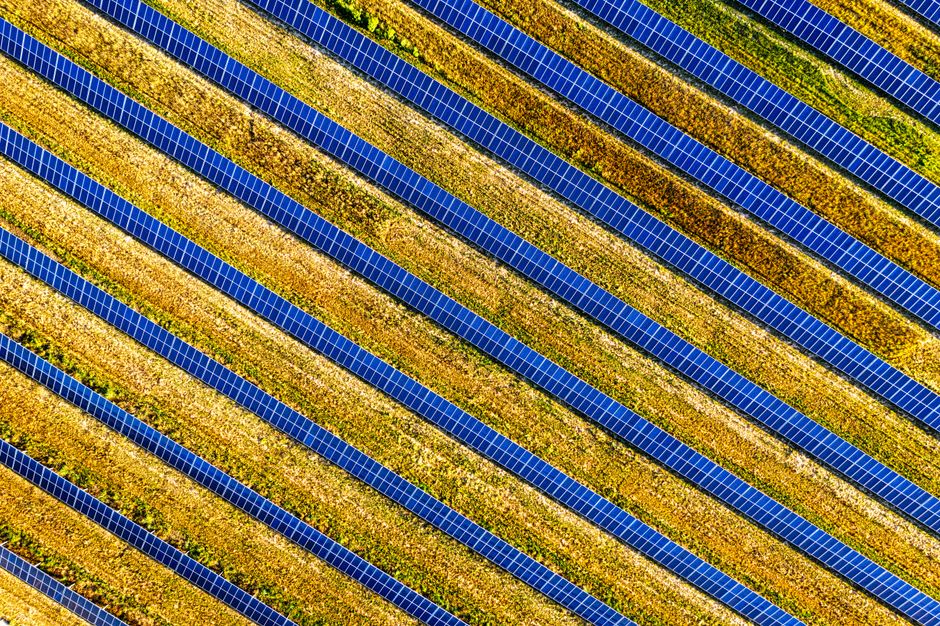
Three gigawatts of installed solar capacity sounds like a revolution. It is actually a very good start being held hostage by a very slow system.
Ireland crossed the 3GW solar milestone in 2024, with EirGrid reporting that renewables accounted for over 40% of electricity generation across the year. Ministers stood at podiums. Press releases went out. The phrase "renewable energy leader" appeared in several of them. What did not appear was an honest account of how much of that solar capacity is sitting idle, curtailed, or delayed because the infrastructure needed to carry the power from field to socket simply does not exist yet.
The Grid Is the Actual Problem
Ireland's transmission and distribution grid was built for a fossil fuel world. Power flowed in one direction: from large central stations outward to consumers. Solar and wind flip that logic. Power now originates at hundreds of dispersed points across Tipperary, Wexford, and Offaly, and needs to travel back up through a network not designed for the journey.
EirGrid's own figures show that curtailment, the forced switching off of renewable generation because the grid cannot absorb it, cost the system roughly 7% of available wind and solar output in 2023. That number does not sound catastrophic until you translate it. Seven percent of Ireland's renewable output is enough electricity to power every home in Cork city for a year, thrown away not because the sun stopped shining or the wind stopped blowing, but because the cables and substations could not cope.
The fix is not complicated in theory. Build more grid. The problem is that grid infrastructure in Ireland takes between seven and twelve years from planning application to energisation. A solar farm can be permitted and built in under three. The generation asset is ready. The network it needs to connect to is not.
The Supply Chain Queue Nobody Warned Us About
Assume for a moment that Ireland accelerates grid build-out. There is a second problem waiting behind the first one. The global supply chain for high-voltage transformers, the large units that step electricity up and down for transmission, is running at full capacity with a backlog stretching to 2027 and beyond.
This is not an Irish-specific failure. It is the consequence of every developed economy deciding simultaneously that it needed to rebuild its energy infrastructure. Germany, the UK, Denmark, and Ireland are all queuing for the same equipment from the same manufacturers. A 400kV autotransformer that EirGrid needs for a substation upgrade in the midlands is competing for factory time in Nuremberg with orders from National Grid in the UK and TenneT in the Netherlands.
The lead time for that equipment now sits at three to four years in most cases. That means a substation that EirGrid greenlights today is not operational until 2028 at the earliest, assuming no further delays in planning or civil works. The solar farms that would feed into it are ready now.
Three Bottlenecks, in Order of Urgency
Understanding the problem clearly means separating it into its parts. The order matters because fixing them out of sequence wastes money.
1. Planning reform. The planning system remains the first gate. Ireland's grid connections and grid reinforcement projects face the same objection-heavy, legally-exposed planning process as a housing estate. The planning infrastructure bottleneck is not unique to energy, but in energy it has a direct cost measured in curtailed megawatts every single day.
2. Equipment procurement. EirGrid and ESB Networks need to be ordering transformers, switchgear, and cabling years ahead of the planning permission being granted, not after. That requires capital commitment before certainty, which is uncomfortable for a state body but unavoidable given current lead times. Ordering on approval means energising on a five-year delay.
3. Connection queue reform. The current grid connection process in Ireland operates on a first-come, first-served basis, with projects queuing regardless of their readiness, location, or strategic value. The Commission for Regulation of Utilities has signalled reform, but developers with fully-permitted, shovel-ready projects are still waiting behind speculative applications that have no planning permission and no finance.
What the Data Centre Complication Adds
The irony Ireland cannot ignore is that data centres betting on liquid cooling and AI infrastructure are competing for the same constrained grid capacity as renewable generators trying to feed into it. A large hyperscale data centre in Meath or Kildare draws as much power as a small town. There are currently over 80 data centres operating on the island, with more in the planning system.
EirGrid's demand forecasts show electricity consumption in Ireland potentially doubling by 2033, driven primarily by data centre load. The grid needs to expand to carry more renewable supply and more industrial demand at the same time, on a planning and procurement timeline that was set in a calmer era. The producer and the consumer are both growing faster than the pipe connecting them.
The Opportunity and the Honest Difficulty
Ireland's solar resource is genuine. The country sits in an Atlantic wind corridor that makes its renewable potential among the highest in Europe on a per-capita basis. The pipeline of projects with planning permission is real. The investment interest, from European utilities, infrastructure funds, and domestic developers, is real.
The opportunity is not in doubt. What is in doubt is the speed of delivery. A country that can permit a solar farm in 18 months but cannot connect it for six years has not built a renewable energy system. It has built a renewable energy waiting room.
The businesses that will profit from Ireland's energy transition are not the ones announcing capacity milestones. They are the ones solving the infrastructure problems sitting behind the milestone. Grid engineering firms, equipment logistics specialists, planning consultancies with renewable expertise, and domestic manufacturers of balance-of-system components all have a clearer path to durable revenue than another project developer adding to the connection queue.
Three gigawatts installed is a fact worth celebrating for about ten minutes. Then the question is: how do we connect the next three, and how fast?
The solar boom is real. The grid to carry it is not ready. That gap is where the actual work is, and closing it is the only thing that makes the headline number mean anything.