The €1,100 Jobs Question: How Integer's €4.9bn Takeover Exposes Ireland's Medtech Vulnerability
One American company just bought 1,100 Wexford jobs for €4.9bn, and Ireland had no seat at the table.
That is not a criticism of the deal itself. Integer Holdings acquiring Enovis's cardiac rhythm management and heart failure business is a legitimate commercial transaction between two sophisticated US medtech players. What it exposes, with uncomfortable clarity, is the structural position Ireland occupies in global manufacturing: essential enough to build, expendable enough to close, and too dependent on foreign ownership decisions to control either outcome.
What Actually Changed Hands
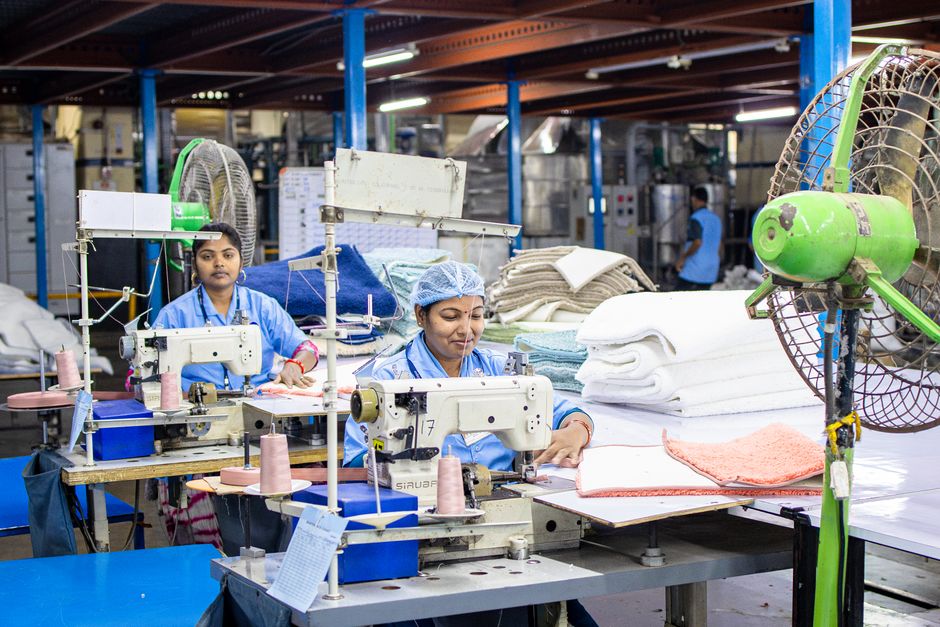
Integer Holdings, headquartered in Plano, Texas, paid €4.9bn to acquire a portfolio of medical device manufacturing assets. The Wexford facility, which produces components for cardiac devices including pacemakers and defibrillators, sits inside that portfolio. It employs roughly 1,100 people in a county where that number represents a significant share of high-skill industrial employment.
To put €4.9bn in context: that is approximately the annual output of the entire Irish construction sector. Integer did not buy a factory. It bought a global supply chain position, and Wexford came with it.
The 1,100 workers are skilled. The facility is established. The products it makes are regulated, certified, and embedded in global supply chains that cannot be rebuilt quickly elsewhere. All of that protects those jobs in the short term. None of it gives Irish policymakers any structural control over what happens if Integer decides in five years that consolidating production in a single North American site is tidier for their margins.
The Foreign Ownership Model Is Not the Problem. The Dependency Is.
Ireland built its industrial base on foreign direct investment, and for the most part that strategy worked. IDA Ireland brought in the pharmaceutical companies, the medtech firms, the tech giants. Towns like Wexford, Galway, and Limerick got plant, payroll, and skills that would not have arrived otherwise. The model is not wrong.
The problem is what Ireland failed to build alongside it: indigenous companies of sufficient scale to anchor employment independently of US boardroom decisions. The medtech sector is a precise illustration of this gap. Ireland is one of the largest exporters of medical devices in the world. The country exports over €12bn worth of medical devices annually. Yet the ownership of the factories producing that output is overwhelmingly foreign. Ireland is a producer economy that does not own its production.
The Irish life sciences paradox runs deeper than the hiring and firing cycles. The real paradox is that Ireland has world-class manufacturing capability and almost no world-class Irish-owned manufacturers to show for it.
What Policymakers Are Missing: A Three-Part Framework
The policy conversation after every acquisition like this follows a predictable pattern. First comes reassurance that jobs are safe. Then comes a statement about Ireland's attractiveness as a location. Then comes silence until the next deal. That sequence misses three things that actually matter.
1. Anchor the skills, not just the headcount.
The value in Wexford is not 1,100 bodies on a payroll. It is 1,100 people who understand precision manufacturing, regulatory compliance, and medical-grade quality systems. That knowledge walks out the door with them if the plant closes, and it disperses. Policy should be building pathways from foreign-owned plants to indigenous spinouts before a closure forces the issue. Germany's Mittelstand model did exactly this over decades. Ireland has the talent base. It lacks the incentive architecture to convert that talent into founder-owned companies.
2. Treat clusters as strategic assets, not tourist attractions.
Wexford, Galway, and Limerick are genuine medtech clusters. They have the workforce, the supply chains, the regulatory expertise. But a cluster anchored entirely in foreign subsidiaries is not a cluster in any resilient sense. It is a collection of branch plants that share a geography. Real clusters have Irish-owned primes at the centre pulling in foreign expertise, not the reverse. Enterprise Ireland's ambition here needs to be bolder and its patience longer.
3. Build a sovereign industrial stake, not a grant system.
Ireland gives substantial grants and tax concessions to attract foreign manufacturers. That money goes out the door and the ownership stays abroad. A modest reallocation of those resources into co-investment vehicles, where the state takes an equity stake alongside foreign investors in exchange for enhanced location commitments, would change the risk profile entirely. This is not nationalisation. It is what a commercially literate government does when it wants to convert a tenant into a partner.
The Medtech Vulnerability in Numbers
Ireland has approximately 450 medical device companies operating in the country, employing around 45,000 people directly. The sector punches well above its weight globally. But the CSO's own trade data shows that the overwhelming majority of that export value flows back to parent companies in the United States. Ireland captures the wages and the corporation tax. The equity value accumulates elsewhere.
When Integer paid €4.9bn for this portfolio, no Irish entity received a cent of that premium. The workforce will keep their jobs, for now, and keep paying PAYE. But the capital gain on a generation of skilled Irish manufacturing went to shareholders in Connecticut and wherever else Enovis stock was held.
That is not a scandal. It is the logical outcome of a system designed to attract investment rather than build ownership.
The Turn
The Integer deal is not a crisis. Wexford's jobs appear secure in the near term and Integer has every commercial reason to keep a high-functioning facility running. But this acquisition is a mirror, and Ireland should look at what it reflects. A country that is world-class at manufacturing other people's products and novice-level at owning the companies that make them is a country that will keep having this conversation every time a US acquirer changes hands.
From semiconductor spinouts to the broader innovation ecosystem, the pattern repeats: Ireland generates the capability and exports the ownership. At some point, that stops being a feature of the model and starts being the model's fundamental failure.
The 1,100 jobs in Wexford deserve more than reassurance. They deserve an industrial policy that treats their skills as a national asset worth anchoring, not just a line in an IDA success story. Build the ownership structures now, while the plants are running and the talent is there. Waiting for a closure notice is not a strategy. It is a habit.