From Semiconductor Spinouts to AI Courses: How Ireland's Innovation Ecosystem is Actually Evolving
Ireland's research institutes are quietly building the foundation that the next generation of Irish companies will either stand on or ignore.
Tyndall National Institute in Cork recorded its best ever spinout year in 2024, producing seven new companies from its semiconductor and photonics research. CeADAR, the national centre for AI, simultaneously launched a structured programme of applied AI training aimed directly at working professionals. These two moves look unrelated on the surface. They are not. They are a coordinated infrastructure play, and understanding what it means for your business is more useful than admiring it from a distance.
What Tyndall's Spinout Record Actually Means
Seven spinouts in one year from a single Irish research institute is not a vanity metric. Each company represents a technology that passed the basic test: somebody with real money thought it was worth building a business around. That is a harder filter than a press release.
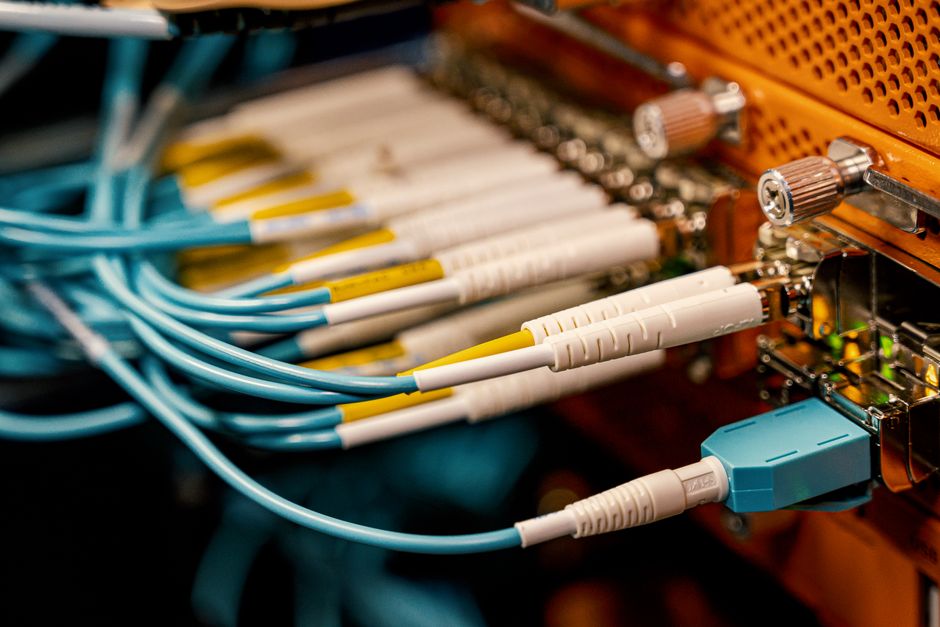
Tyndall's work sits in compound semiconductors, photonics, and chip-scale sensing. These are not consumer apps. They are the components inside medical devices, telecommunications infrastructure, and the kind of industrial sensors that manufacturing plants depend on. The semiconductor sector's expansion in Ireland has created genuine pull for this work. When Intel, Apple, and a growing cluster of fab-adjacent suppliers all need specialised components and cannot source them easily, a spinout that solves a narrow supply problem has real customers before it has a marketing budget.
The opportunity here is specific. Tyndall spinouts are not building consumer products competing on price against Chinese manufacturers. They are building components that larger companies need and cannot easily replace. Scarcity, not discounting, is the commercial logic. That is the right posture.
The fear is equally specific. Seven spinouts need capital, customers, and management talent simultaneously. Ireland's deep tech funding market has improved but it remains thin relative to Boston or Munich. A company that gets through the lab door and then stalls for eighteen months waiting for a Series A does not become a pillar of the ecosystem. It becomes a case study in what went wrong.
What CeADAR's Training Launch Actually Solves
CeADAR's new AI training is aimed at a different problem but it connects to the same gap. The AI skills shortage in Irish business is not mainly a shortage of PhD researchers. It is a shortage of people who can take a working AI tool and deploy it inside a real business process without breaking compliance, burning the budget, or producing outputs nobody trusts.
The distinction matters. Researcher versus practitioner is the binary here. Ireland produces decent research talent. What it chronically underproduces is the middle layer: data engineers, ML ops specialists, and product managers who know enough about models to make useful decisions about them. CeADAR's applied programmes target that layer directly.
The numbers give context. Ireland has roughly 270,000 people employed in professional services and technology roles according to the CSO's own figures. If even five percent of those roles require meaningful AI competence within three years, that is 13,500 people who need retraining. That is not a small cohort. It is roughly the entire population of Tralee.
The Three-Layer Framework Mid-Market Companies Should Use
The move that most Irish mid-market companies get wrong is treating innovation infrastructure as a spectator sport. They read about Tyndall and CeADAR and file it under "things the government is handling." That is the employee mindset applied to company strategy. The entrepreneur's read is different.
Here is how to engage with this infrastructure rather than watch it:
Layer 1: Research access. Tyndall and CeADAR both have formal industry engagement programmes. Tyndall's Industry Partnership Programme allows companies to co-fund research projects and retain commercial rights to outputs. The cost is a fraction of building equivalent capability internally, and the work is done by people who have spent years on these problems. This is not charity. It is buying R&D capacity you cannot hire.
Layer 2: Talent pipeline. CeADAR's training cohorts are not just producing individuals who go on to work for multinationals. They are producing people who understand applied AI in an Irish business context. Companies that engage with those programmes as placement partners, or that sponsor employees through them, get first access to that talent. Companies that wait to hire from the open market compete against Google and Microsoft for the same people.
Layer 3: Supply chain positioning. Tyndall spinouts need early customers. A mid-market Irish manufacturer or medtech company that becomes a reference customer for a Tyndall-derived sensor or component gets a technology advantage and a relationship that larger competitors cannot easily replicate. Being a producer in that supply chain, rather than a passive consumer of whatever the multinationals bring in, is the strategic play.
The order of these layers matters. Research access shapes what you know is coming. Talent pipeline determines whether you can act on it. Supply chain positioning is where the commercial benefit actually lands. Running them in reverse, chasing the supply chain opportunity without the knowledge or the people, is how companies spend money without building capability.
The Turn
Ireland has built something real here. Tyndall's output is not an accident. It reflects two decades of sustained investment in deep tech research, backed by Science Foundation Ireland and latterly Enterprise Ireland's commercialisation programmes. CeADAR's expansion reflects a clear-eyed reading of where the skills gap will hurt most. The infrastructure exists. The question is whether Irish companies treat it as a public amenity or as a competitive input.
The companies that will look smart in five years are not the ones that waited for a government report. They are the ones that walked into Tyndall this year and asked what problem they could fund a solution to together.
Build with the infrastructure. Do not just benefit from it by accident.