Grafton's €1.5bn Half-Year Win Reveals Who's Really Benefiting From Ireland's Building Boom
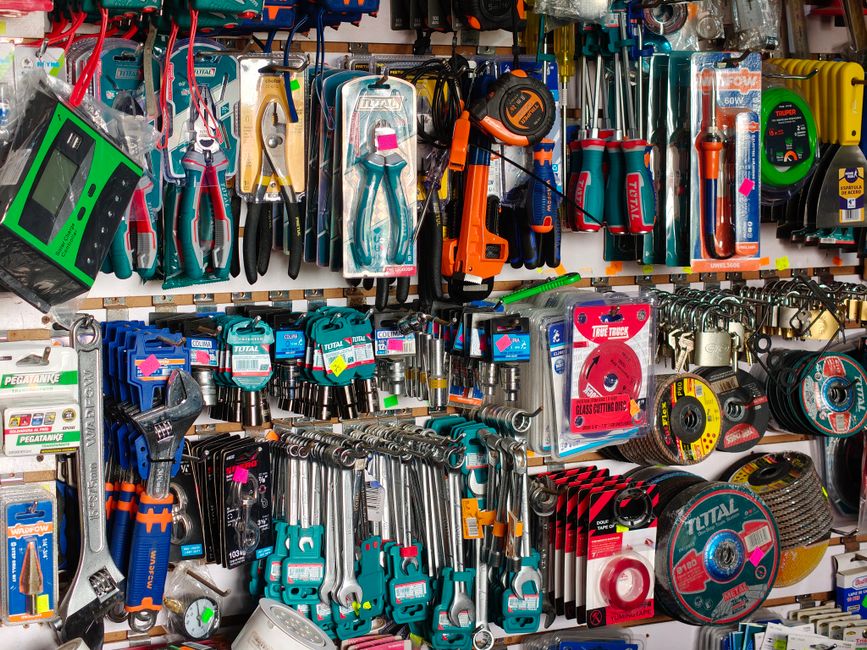
The most reliable way to profit from a gold rush is to sell the shovels. Grafton Group just reported €1.5bn in half-year revenue, and they have not laid a single brick.
That number is roughly the same as the entire annual budget of Limerick City and County Council. It comes from selling timber, plumbing fittings, paint, and power tools through Chadwicks trade counters and Woodies DIY stores. Grafton sits upstream from the construction site, which is exactly where you want to be when Irish building activity is running hot and the planning system is still the main thing stopping it from running hotter.
The Supply Chain Outperforms the Sector It Serves
Construction in Ireland is structurally constrained. Land, planning, and skilled labour are all in short supply. The €186m planning system paradox means that even when demand is visible and finance is available, projects stall. Builders wait. Developers carry costs. Timelines stretch.
Grafton does not carry those risks. When a project finally breaks ground, the first phone call goes to Chadwicks. When a homeowner decides a kitchen extension is cheaper than moving, they end up in Woodies on a Saturday morning. The supply chain company converts both outcomes into revenue. The contractor is exposed to delays. Grafton is exposed to footfall, and right now footfall is strong.
This is the producer versus consumer split that most commentary on Irish construction misses. Journalists write about housing output. The sharper question is who captures margin when construction activity rises, and the answer is increasingly the companies one step removed from the actual build.
What Grafton's Numbers Actually Say
Grafton's €1.5bn half-year figure breaks down across three platforms: merchanting (Chadwicks and its equivalents in Britain), DIY retail (Woodies), and a manufacturing arm. The merchanting business is the engine. It serves professional trades directly, so revenue tracks not the completion of homes but the starts, the renovations, and the retrofit programmes running in parallel.
The Irish Government's retrofit scheme, which is pushing insulation and heat pumps into the existing housing stock, feeds Chadwicks as directly as any new build. Ireland has roughly 1.7 million homes, the majority of them built before modern energy standards existed. Every one of them is a potential Grafton transaction. That is not a market with a ceiling anyone can see from here.
Woodies tells a different part of the same story. When mortgage top-up lending rises, as it has been doing steadily, homeowners spend on their existing properties rather than trade up. They extend, renovate, and improve. They buy the drill, the tiles, and the decking boards. Woodies captures that spend regardless of whether planning permission was ever involved.
Three Positions in the Building Boom
The distinction between these three positions matters enormously when you are thinking about downside risk.
Position one: the developer. Exposed to land values, planning timelines, interest rates, and the sales market all at once. When any one of those turns, the project can go underwater while the timber order is already delivered.
Position two: the contractor. Works on margin. Squeezed by materials costs on one side and fixed-price contracts on the other. Every month of delay is a month of overhead with no revenue against it.
Position three: the supply chain company. Sells to both the developer's site and the contractor's van. Gets paid on delivery. Carries inventory risk, not project risk. When the market softens, volumes drop but the business does not go insolvent because a single planning decision went against it.
Grafton is position three, and has been for decades. That is not an accident. It is a structural choice about where to sit in a volatile sector.
Why the Next Recession Will Not Hit Everyone Equally
The building sector in Ireland has a binary history. It was either booming or collapsing for most of the last thirty years. The 2008 crash wiped out developers and contractors in enormous numbers. The supply chain companies that survived were battered but they came through, because demand for maintenance, repair, and renovation never fully disappears even when new construction falls off a cliff.
An owner-occupier whose house needs a new roof does not wait for the economy to recover. A landlord whose tenant has stopped paying still has to fix the boiler or face a legal problem. These are non-discretionary purchases that flow through the same Chadwicks counter as the big site orders. The revenue mix is more defensive than it looks.
This is the honest version of what Grafton's numbers are telling the market. Revenue of €1.5bn in six months is not just a reflection of how hot Irish construction is right now. It is a reflection of a business model that has positioned itself to benefit from activity across the full cycle, not just at the peak.
The fear worth naming is concentration risk in Britain. A significant portion of Grafton's merchanting business runs through its UK operations, and sterling weakness or a British construction slowdown creates a drag that Irish volumes cannot fully offset. That is the real number to watch in the second half, not the Woodies like-for-likes.
The Lesson for Irish Business
The building boom is real. The €3.8bn housing finance boom has capital moving. Planning reform, slow as it is, is moving in the right direction. But the companies that will compound value through the cycle are not the ones swinging the hammer. They are the ones supplying what the person with the hammer needs before they even arrive on site.
Grafton understood this before most people were paying attention. The question for Irish entrepreneurs watching this is not how to get into construction. It is what equivalent position exists in other volatile, capital-intensive sectors where supply chain proximity beats direct exposure every time.
The shovel seller beats the gold miner in the long run. Grafton's half-year accounts are just the most recent proof.