Ireland's Solar Boom Hits a Turning Point: Here's What the New Support Scheme Actually Changes
Ireland is now paying nearly half the cost of a commercial solar installation. The question is not whether that is generous. The question is whether the infrastructure exists to make the generosity count.
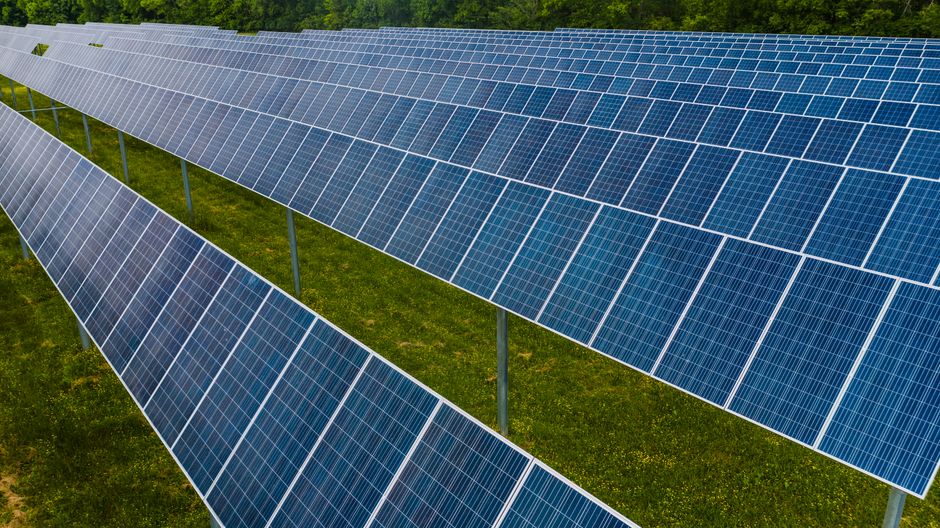
The Renewable Electricity Support Scheme, known as RESS, has just increased its commercial solar subsidy to 45%. That means a farm or food business spending €200,000 on a rooftop array could receive €90,000 back from the state. To put that in terms a farmer can picture, that is roughly the cost of a new John Deere tractor, handed back to you for choosing panels over diesel. It is a serious number, and it signals that the government has moved from aspiration to incentive in a way that changes the calculation for thousands of Irish businesses.
The commissioning of Meadhill Farm in Westmeath adds a concrete data point to what has been, until recently, a sector heavy on announcements and light on kilowatt hours. Meadhill is not a pilot project. It is a working farm generating solar electricity at commercial scale, feeding into the national grid and demonstrating that the agri-solar model, land producing food and energy simultaneously, is not theoretical.
What the 45% Subsidy Actually Changes
Before this revision, the economics of commercial solar in Ireland were marginal for many operators. The payback period on a typical 250 kilowatt rooftop system, before grant support, ran to twelve or fourteen years. At 45% subsidy that period compresses to somewhere between six and nine years depending on the site, the connection cost, and what the operator does with the electricity. Six years is a timeframe a business owner can plan around. Fourteen years is a gamble on who owns the building.
The shift changes three things at once.
Step 1: The investment decision moves from owner to occupier. When payback stretched past a decade, only landowners with long planning horizons pulled the trigger. At six to nine years, a business with a fifteen-year lease can now do the maths and make it work. That opens the scheme to a much larger pool of commercial rooftops across retail, food processing, logistics, and light manufacturing.
Step 2: The risk profile shifts from speculative to bankable. Banks will lend against a project with a government-backed support rate and a sub-decade payback. Before this subsidy level, green energy loans for SMEs were difficult to price. Now the numbers are clean enough for a credit committee to approve without a specialist energy team.
Step 3: The sector moves from early adopter to mainstream. Early adopter projects ran on enthusiasm and tax strategy. Mainstream adoption runs on simple return. When the subsidy is 45%, the conversation stops being about climate commitment and starts being about the electricity bill. That is when volume arrives.
The Infrastructure Problem Nobody is Solving Fast Enough
Here is what the subsidy cannot fix. The grid connection queue in Ireland currently runs to several years for projects above certain capacity thresholds. EirGrid's own published figures show that the volume of generation capacity seeking connection dwarfs what can be processed in any reasonable planning window. A business that makes the investment decision today, secures planning, installs panels, and then waits three years for a grid connection has not built an energy asset. It has built a very expensive roof decoration.
The €3bn Solar Boom Is Hiding Ireland's Real Energy Problem made exactly this point. The money flowing into solar projects in Ireland is real. The physical capacity to export that electricity when the sun shines and demand is low is not keeping pace. Curtailment, where generators are told to switch off because the grid cannot absorb the power, is already a feature of the Irish renewable landscape. Adding more generation capacity without resolving that constraint does not solve an energy problem. It creates a more expensive version of the same one.
The planning system compounds this. A commercial solar installation above a certain scale requires planning permission, and Irish planning timelines are what they are. The €186m Planning System Paradox documented how infrastructure bottlenecks function as a hidden tax on investment. Solar is no exception. A farmer or a food manufacturer who moves fast on the investment decision can still find themselves parked in a queue that erodes the financial case before the first panel is connected.
What Meadhill Farm Actually Proves
The Meadhill model matters beyond the electricity it generates. It proves that Irish farmland can carry both productive agriculture and commercial solar without one destroying the other. The panels are mounted high enough for sheep grazing underneath. The land classification for agricultural support payments is retained. The farm income is supplemented, not replaced.
For the 137,000 farm holdings the CSO counts across Ireland, that combination is significant. A 50-hectare farm with a solar installation generating export revenue turns land from a single-income asset into a dual-income one. The subsidy makes the capital cost manageable. The Meadhill example makes the operational model visible.
The agri-solar case also sidesteps the objection that solar competes with food production. The argument that Ireland should not cover farmland with panels because food security matters is a reasonable one. The answer Meadhill offers is that the two uses are not mutually exclusive when the installation is designed from the start to accommodate both.
The Turn
The 45% subsidy is the right number at the right time. Irish businesses, particularly in agri-food and logistics, are operating with energy costs that have restructured their margins over the past three years. A capital grant that compresses the payback period to within a planning horizon is not a climate gesture. It is a cost-management tool, and it will be adopted as one.
The risk is that the grid and the planning system treat this as someone else's problem while the investment queue builds. A subsidy without a connection is a promise without a delivery date.
Ireland is right to price solar energy as a strategic asset rather than a lifestyle choice. The next argument worth having is not about the subsidy rate. It is about whether the infrastructure is being built at the same pace as the ambition that surrounds it.