Ireland's Industrial Decarbonisation Race: Who's Actually Winning.and Why Businesses Are Being Left Behind
The cost of Ireland's climate ambition is not being shared equally. Large multinationals with dedicated sustainability teams and access to cheap green finance are moving. Irish-owned manufacturers, the ones running on tight margins in Leitrim and Limerick, are standing still, not from lack of will, but because the policy signals pointing at them are pointing in four different directions at once.
Ireland has committed to cutting industrial emissions by 35% below 2018 levels by 2030. The Climate Action Plan puts that figure in black and white. For the broader economy, the target is a 51% reduction in overall emissions over the same period. That is roughly eight years of transformation compressed into what is now four. The ambition is right. The infrastructure to deliver it for domestic manufacturers is not there yet, and the gap between the announcement and the apparatus is where businesses are getting hurt.
The Numbers That Actually Matter
Ireland's industry sector accounts for roughly 10.5 million tonnes of CO2 equivalent per year, according to the Environmental Protection Agency's own data. Cement, pharmaceuticals, food processing, and chemicals make up the bulk of that. The EPA's 2023 emissions inventory showed industry emissions falling by just 1.8% in a year when the target trajectory demanded something closer to 5% annually. At the current pace, Ireland misses its 2030 industrial target by a margin you could drive a truck through.
The carbon tax is now at €56 per tonne and is scheduled to reach €100 per tonne by 2030. For a mid-sized food manufacturer burning 2,000 tonnes of gas a year, that trajectory adds somewhere between €80,000 and €150,000 to annual operating costs before a single capital investment is made. That is not a rounding error. That is a wage bill. The tax is designed to change behaviour, and it will, but only if the alternatives are actually available and affordable. Right now, in too many cases, they are not.
The Three Contradictions Blocking Industrial Decarbonisation
There is a pattern here, and it has three parts. The order matters because each one compounds the next.
1. The grid isn't ready for what the grants are asking you to do.
The government's SEAI industrial energy efficiency grants are live and funded. Businesses are being asked to switch from gas to heat pumps and electrified processes. The problem is that EirGrid's own capacity assessments show large parts of the midlands and west operating at or near grid limits for new industrial connections. A manufacturer in Roscommon who applies for a heat pump grant today may wait 18 to 36 months for a grid connection capable of running it. The grant arrives before the infrastructure does. That is not a transition plan. That is paperwork.
2. The carbon cost is immediate but the relief is delayed.
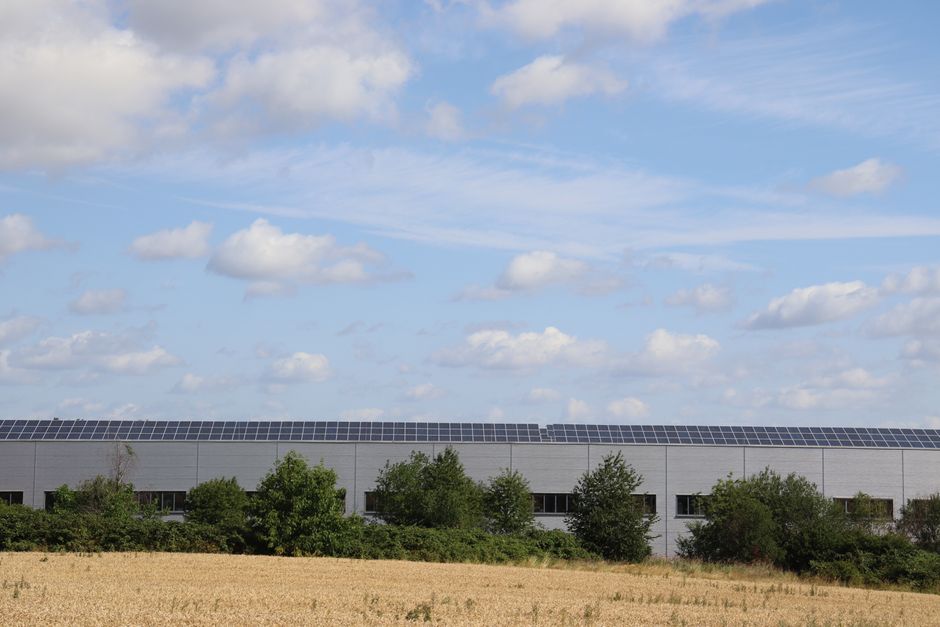
The EU Emissions Trading System applies to Ireland's larger industrial sites, around 100 installations. Carbon costs under the ETS are real and rising, now trading above €60 per tonne. The green alternatives, onsite renewables, power purchase agreements, biomethane supply, are either not at scale in Ireland or are bottlenecked by the same grid and planning constraints mentioned above. Ireland's solar boom is genuine, but the rooftop and industrial-scale solar projects that would give manufacturers cost certainty are still fighting through planning and grid queue backlogs that average over two years. You pay the carbon cost today. You get the relief, maybe, in 2027.
3. The supports favour the large over the small.
Enterprise Ireland's Climate Action Fund and the SEAI's Large Industry Energy Network do solid work. But their application processes, audit requirements, and minimum project sizes effectively filter out businesses below a certain scale. A manufacturer with 40 employees and a €6 million turnover does not have the internal capacity to write a bankable decarbonisation roadmap. They need someone to do that with them, not a grant portal and a PDF.
Who Is Actually Moving
The businesses making progress share one characteristic: they treated the transition as a cost management decision, not a compliance exercise. That is the producer's posture versus the consumer's posture. One asks what we can build, the other asks what we owe.
Kerry Group has committed to science-based targets and has been replacing thermal energy in its processing plants with electrified alternatives. Bord na Móna converted from peat to wind and solar, shedding one identity and building another. These are not small businesses, and the capital available to them is not comparable to what an owner-managed manufacturer in Tullamore can access. But the logic is transferable. The businesses that move earliest lock in lower carbon costs, attract better talent, and are better positioned for EU supply chain sustainability rules that will shortly require large buyers to account for Scope 3 emissions, meaning your emissions become your customer's problem if you haven't dealt with them.
What a Functioning Policy Would Look Like
Four steps, in order, because sequence is everything.
Step 1: Grid connections before grants. No manufacturer should receive a decarbonisation grant for electrified equipment without a confirmed grid connection timeline. Connect the two. The current system is the equivalent of selling someone a car before building the road.
Step 2: A single industrial transition contact point. One SEAI or Enterprise Ireland case manager per qualifying site, not a different agency for energy, for planning, for finance. The coordination cost currently falls on the business. That is backwards.
Step 3: Biomethane supply contracts at scale. Ireland has the agricultural base to produce significant volumes of biomethane, reducing gas dependency for manufacturers who cannot electrify easily. The target of 5.7 TWh of biomethane by 2030 is in the Climate Action Plan. The offtake agreements and blending infrastructure to get there are moving far too slowly.
Step 4: Carbon tax revenue ringfenced for SME transition. The carbon tax will collect over €1.3 billion in 2024. A defined portion, not a discretionary amount, should flow back to SME manufacturers as direct transition support. Not loans. Not loans disguised as grants with output conditions attached. Direct support.
The Turn
There is a version of this story that ends well. Ireland has real advantages: a young workforce, a strong research base, EU market access, and a government that is at least saying the right things. The question is whether the scaffolding catches up with the ambition before the penalties hit businesses that had no real path to move faster.
The opportunity and the fear are the same thing. Move early and decarbonisation becomes a competitive asset. Wait for perfect policy and someone else's customer list starts looking very attractive to your buyers who have their own net-zero commitments to report against.
Ireland can build a manufacturing base fit for a carbon-constrained world. But not by issuing targets and then making the route to meet them depend on grid queues, planning delays, and application forms designed for companies ten times the size of the ones that need them most.