Why Ireland's Right to Repair Rules Are Creating a Hidden Opportunity for Tech Startups
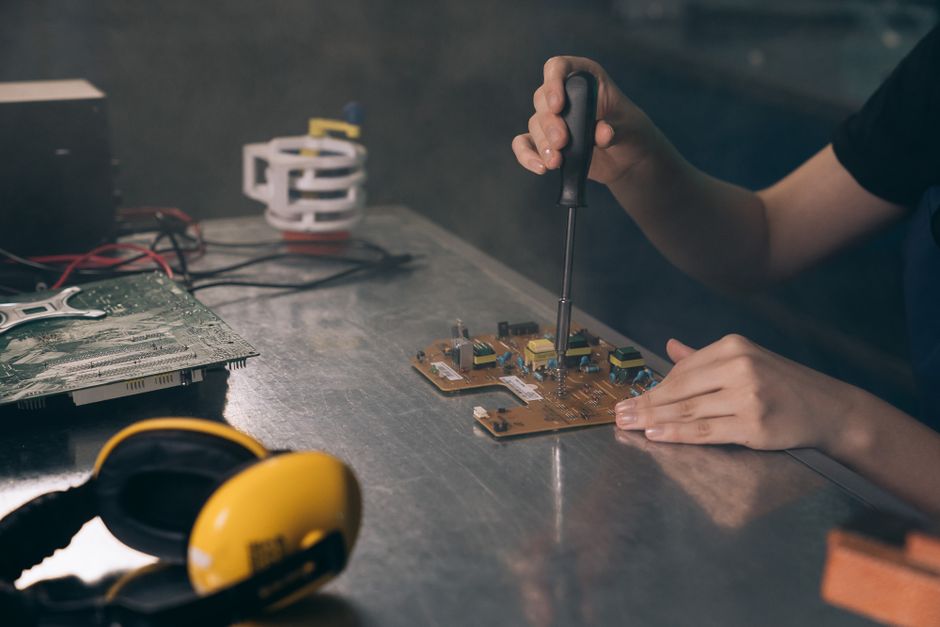
Regulation creates losers and winners in equal measure. The Irish entrepreneurs who read the EU's right to repair rules as a compliance burden are the losers. The ones reading them as a demand signal are building businesses right now.
The EU's Right to Repair Directive came into force in July 2024. It covers smartphones, tablets, laptops, washing machines, vacuum cleaners and televisions sold across the bloc. Manufacturers must now supply spare parts, tools and repair information at reasonable prices. They cannot use software locks to block independent repairs. They cannot design products to obstruct servicing. For the first time in a generation, the regulation is structurally on the side of the repairer, not the manufacturer.
Ireland sits in an interesting position here. We are a country that imports almost every electronic device we use, which means we send money out every time we replace rather than repair. The CSO estimates that Irish households spent over €2.1 billion on electronics in 2022 alone. A significant fraction of that spending was driven not by desire for a new product but by the unavailability of affordable repair. That is demand waiting to be captured, not a market that needs to be created from scratch.
The Gap the Directive Opens
The directive does not build repair infrastructure. It mandates the inputs: parts, information, software access. The infrastructure has to come from somewhere, and right now in Ireland it barely exists at scale.
Walk into any town in Munster or Connacht and you will find one or two phone repair shops run by individuals working from a counter the size of a kitchen table. They are good at what they do. They are not scalable. There is no booking system, no warranty standardisation, no parts procurement network, no quality certification. Customers walk in not knowing what they will pay or how long they will wait. That is not a mature market. That is a market in the earliest stages of organisation.
The opportunity is to build the layer above the individual repairer. Think of it as the difference between a single taxi driver and a fleet operator. The individual repairer is the asset. The platform, the parts logistics, the customer interface and the quality assurance are the business.
Three Places Irish Startups Can Move
1. Repair-as-a-service platforms. The model is straightforward: a booking and dispatch platform that connects consumers with vetted independent repairers, handles the warranty, manages the parts order and charges a margin on both ends. Consumers get certainty. Repairers get volume. The platform takes the coordination fee. This is not a novel idea globally, but it does not exist at meaningful scale in Ireland. The directive gives it a legal foundation it did not have before, because manufacturers can no longer legally refuse to supply the parts a platform would need to fulfil repairs.
2. Parts procurement and logistics. This is less glamorous and more defensible. Under the directive, manufacturers selling in the EU must make spare parts available to independent repairers. That creates a supply chain that currently has no efficient Irish aggregator. A startup that builds the relationships with European parts distributors, warehouses intelligently, and sells to repairers on a next-day basis in Ireland is building a moat that takes years to replicate. Irish consumers replace roughly 800,000 smartphones per year. If even a quarter of those become repairs instead of replacements, the parts volume alone justifies a serious logistics operation.
3. Repair diagnostics software. This is where Ireland's innovation ecosystem has an edge that should not be wasted. Diagnosing what is wrong with a device before committing to a repair is the single biggest barrier to scaling repair throughput. Most independent repairers diagnose by feel and experience. A software tool that runs standardised diagnostics, produces a condition report, quotes a repair price and auto-generates a parts order is worth real money to every repairer in the country. The software costs the same whether it is used in Letterkenny or Limerick.
The Fear Founders Need to Name
The manufacturers are not passive here. Apple, Samsung and the others have spent years optimising against independent repair. They will comply with the letter of the directive while finding every permissible way to make manufacturer repairs the path of least resistance. Authorised service networks will be promoted. Prices for parts may be set at levels that make independent repair uncompetitive on older models.
The window is real but it is not permanent. The founders who move in the next eighteen months, while the parts supply chains are still being established and consumer habits are still being formed, will have a structural advantage. The ones who wait for the market to mature before entering will find the manufacturers and two or three well-funded European platforms have already defined the category.
There is also a skills problem that nobody is solving. Repair technician training in Ireland is fragmented and unaccredited. A startup that creates a certification pathway and trains a cohort of repairers is not just doing workforce development. It is building a supply side that it can then organise and monetise.
What the Numbers Actually Mean
The European Commission's own impact assessment put the potential value of the EU repair market at €4 billion annually once the directive is fully operational. Scale that to Ireland's share of EU GDP and you are looking at a market worth somewhere between €60 million and €100 million per year. That is not a hobby business. That is a category.
For context, €80 million is roughly what Irish consumers spend on coffee capsules every year. It is a number people can picture. It is also a number that justifies three or four serious startups, a few rounds of seed funding, and at least one business that eventually exports the model to the UK, which is watching EU repair regulation closely even post-Brexit.
The Turn
The circular economy is often discussed in the language of environmental virtue, which is fine as far as it goes, but virtue does not build a payroll. The more useful frame is this: every device that gets repaired instead of replaced is a transaction that the existing product retail market does not capture. Someone will capture it. The producer posture here is to ask who builds the infrastructure, who owns the customer relationship, and who controls the parts flow.
Ireland has built export-ready software businesses in categories far less obvious than this one. The right to repair is not a compliance story. It is a demand story, and the demand is legally guaranteed.
The founders who treat EU regulation as a map rather than a maze will find the territory more valuable than they expected.