The Small Business Extinction Nobody's Talking About: Inside the Crisis Closing Irish High Streets
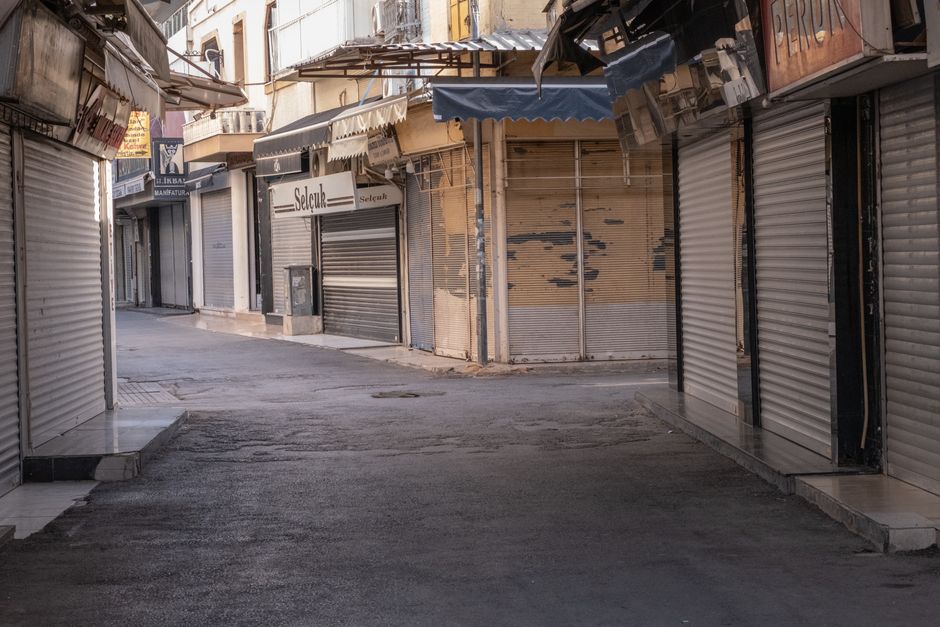
The shelves are empty in a Kilkenny bookshop that outlasted two recessions, a pandemic, and the rise of Amazon. Thirty-two years of trading, and it is gone. The owner did not fail. The system failed around her.
The Numbers Behind the Empty Shopfronts
Retail Ireland puts the number of small independent retailers who closed in 2023 and 2024 at over 1,400 across the country. That is not a statistic. That is one business closing every nine hours, each one representing a family's wages, a town square anchor, and a decade or more of built customer trust, gone from the ground up.
The CSO's own figures show that commercial rents in secondary Irish towns rose by an average of 18 percent between 2021 and 2024, even as footfall in those same towns dropped by up to 12 percent. You are paying more for a room that fewer people walk past. That is not a market signal. That is a structural trap.
The bookshop owner in Kilkenny, who traded from a premises on a main street since 1992, told us her rates bill alone had risen by 34 percent in three years. Her electricity costs doubled. Her book margin sits between 30 and 40 percent on a good day. When your fixed costs eat your margin before a single customer walks in, you are not running a business. You are subsidising a landlord and a utility company.
What Is Actually Killing Small Retail
The honest answer is that it is not Amazon. Amazon is a pressure, not a cause of death. The cause is a four-part cost squeeze that policy makers treat as separate problems when they are one compounding crisis.
Step 1: Rates reform that never arrived. Commercial rates in Ireland are still calculated on a system that values properties against their 2015 rental peak in many local authority areas. A shop on a quiet Midlands high street pays rates benchmarked against a boom-era valuation that bears no relation to current trading reality. The government committed to rates revaluation cycles. In practice, the Valuations Office cycle runs eight to ten years behind the market.
Step 2: Energy costs with no small business buffer. Larger retailers and multinationals negotiate energy contracts at scale, locking in rates that a sole trader or ten-person retail operation cannot access. The result is that a Dunnes Stores pays a fraction per kilowatt-hour of what the independent gift shop two doors down pays. The cost explosion hitting Irish food businesses is the same story in a different category. Scale wins. Small loses. Policy does nothing to close that gap.
Step 3: Wage legislation without transition support. The minimum wage increases introduced between 2022 and 2024 were the right call for workers. They were the wrong call for an owner-operated retailer with four staff and a 35 percent gross margin. There was no phased transition scheme, no temporary rates offset, and no working capital support. You were simply told your costs were going up and good luck to you.
Step 4: No landlord accountability. A landlord can leave a commercial premises vacant for years in a prime town-centre location, paying no penalty, blocking any competitor from taking the space, and waiting for a tenant desperate enough to accept an upward-only rent clause. Ireland abolished upward-only rent reviews in new leases in 2010. Existing leases rolled forward regardless. Fourteen years later, operators are still servicing leases written when the country was spending borrowed money it did not have.
What The Business Owners Actually Say
We spoke to three independent retailers across Kilkenny, Mullingar, and Ennis. None wanted to be named. All three said the same thing in different words: the problem is not competition, it is cost certainty. Or rather, the total absence of it.
"I can handle a bad month," the Ennis owner told us. "I cannot handle a bad month on top of rates I cannot appeal, an energy bill I cannot negotiate, and a lease I cannot renegotiate."
The Mullingar retailer, who runs a homeware shop, described the entrepreneur-versus-employee divide with more clarity than any policy paper. "My staff have certainty. They know their hourly rate, they know their hours, and if the shop closes they get redundancy. I have nothing. I carry all the risk and the system is designed for people who carry none of it."
That is the binary at the heart of this crisis. The entrepreneur carries the downside. The employee, the landlord, and the utility company carry the upside. Policy has spent twenty years talking about supporting small business and structurally doing the opposite.
Three Things That Would Actually Help
These are not radical. They are not expensive relative to the cost of ghost-town high streets and the social infrastructure that disappears with them.
1. An emergency rates circuit-breaker. Any commercial property in a town with footfall below its 2019 level should have its rates automatically capped at 2019 levels until footfall recovers. This costs local authorities revenue. It costs the state significantly less than the social welfare and community services that replace a dead high street.
2. A collective energy purchasing scheme for small retailers. Enterprise Ireland already runs collective procurement pilots in the agri-food sector. Extend the model to retail. A buying group of five hundred small retailers negotiates from the same position as a national chain. This does not require legislation. It requires a decision.
3. Vacancy penalties with teeth. A commercial property left vacant for more than twelve months in a designated town centre should attract a levy equivalent to 50 percent of the market rent. Not a register, not a pilot scheme, not a consultation. A levy. The Irish Small and Medium Enterprises Association has proposed versions of this for a decade. The political will has not arrived.
The Leadership Failure at the Centre of This
Irish retail policy is written by people who do not read retail P&L accounts. That is not an insult. It is an observation. The officials and ministers who shape commercial rates policy, lease legislation, and energy support schemes are, in the main, career public servants and politicians who have never had to make a payroll on a margin below 40 percent.
Small Irish businesses are quietly outperforming giants in sectors where the state gets out of the way. The problem is that retail is a sector where the state never does.
The Kilkenny bookshop is not a story about one owner giving up. It is a leadership story. Leadership chose not to fix the rates system. Leadership chose not to build an energy buffer for small operators. Leadership chose to let landlords sit on empty buildings while towns hollowed out. These were choices. They can be reversed.
The high street is not dying because people stopped wanting things they can hold in their hands. It is dying because we built a cost structure that makes selling those things impossible.