The Knowledge Transfer Goldmine: How Irish Research Spin-Outs Are Creating 2,500 Jobs Nobody's Talking About
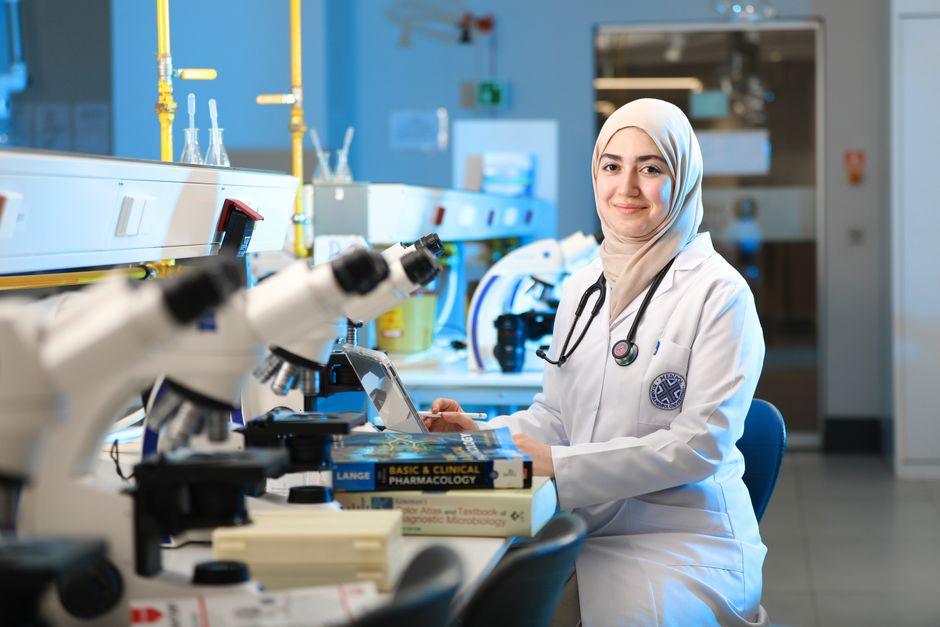
The most productive square metre in the Irish economy right now is not a Google floor plate in Dublin 4. It is a lab bench in UCC, UCD, or the University of Limerick where a researcher has just figured out that what they built also has a commercial use.
The Number That Changes the Conversation
Knowledge Transfer Ireland's own figures show that Irish universities and institutes of technology generated over 2,500 jobs through research spin-out activity in a recent twelve-month period. That is the equivalent of a mid-sized town in Leitrim suddenly getting full employment. Those roles were not outsourced from a US parent company or announced at a ministers' podium. They were built from scratch, by people who started with a patent and a problem worth solving.
The contrast matters. When a large tech firm adds 300 jobs in Ireland, it gets a press conference and a ministerial handshake. When 40 university-linked spin-outs collectively hire those same 300 people across Galway, Cork, and Waterford, it barely makes the regional papers. The bias toward big visible announcements blinds us to where the durable job creation is actually happening.
This is entrepreneur versus employee thinking at a national level. The country is trained to celebrate when a foreign employer picks us. The spin-out model runs the other way: Irish researchers becoming the employer, building assets rather than filling seats in someone else's building.
How the Pipeline Actually Works
Knowledge transfer is not a complicated concept. It has a clear sequence, and the order matters because each step creates the conditions for the next.
Step 1: Research produces something novel. A team at Tyndall National Institute, say, develops a sensor that detects contamination in water at lower concentrations than anything commercially available. The research is funded by Science Foundation Ireland or an EU Horizon grant. The novelty is real but it is locked inside a journal article.
Step 2: The technology transfer office identifies commercial potential. Every major Irish university now has a knowledge transfer office. Their job is to read what the researchers are building and ask one question: who would pay for this, and why? This is the bridge between producer and consumer, between the lab and the market.
Step 3: The IP is protected. A patent is filed. This is not vanity. The patent is the asset. Without it, the researcher has a story. With it, they have something a licensing partner or investor can value on a balance sheet.
Step 4: A spin-out company is formed or a licence is sold. The researcher, often with an entrepreneur assigned by the university or sourced through Enterprise Ireland's New Frontiers programme, takes the IP into a new entity. Seed funding comes from Enterprise Ireland, sometimes from a HBAN angel syndicate, occasionally from a European Innovation Council grant.
Step 5: The company hires. First a commercial lead, then engineers, then salespeople. The jobs are almost always high-value because the product is high-complexity. You do not build a water-quality sensor company by hiring people on the minimum wage.
The reason the order matters: skip step two and you get a patent gathering dust. Skip step three and you have nothing to sell or defend. Skip step four and the research cycle stops funding itself.
Why This Model Is Accelerating
Three things are compounding at once.
First, the infrastructure has matured. Ireland has been building the commercialisation scaffolding for fifteen years, largely through EU Structural and Cohesion Funds that put physical research buildings, equipment, and professional knowledge transfer staff into universities that previously had none of that. The investment is now producing returns that were never visible in the original appraisals because nobody was tracking spin-out jobs as a metric in 2005.
Second, the talent pool is circling back. Irish researchers who spent a decade in Boston, Basel, or Berlin are returning with both technical depth and commercial experience. They know what a Series A pitch looks like. They know how a licence negotiation runs. That combination is genuinely rare and it is landing in Irish universities at the precise moment the spin-out infrastructure is ready to use them.
Third, the sectors are hot. Medtech, agri-biotech, cybersecurity, and climate technology are all areas where Irish university research has critical mass. These are not niche curiosities. They are sectors where global capital is actively chasing proprietary technology. An Irish spin-out with a defensible patent in any of those spaces is not cold-calling investors. The investors are already here, looking.
Ireland's innovation ecosystem has been quietly evolving in ways that reward exactly this model, particularly as semiconductor and deep technology demand creates pull for lab-to-market transitions that were previously too slow or too risky to fund.
The Real Risk Nobody Names
The opportunity is real. The fear is equally real, and it deserves naming plainly.
Most spin-out companies fail before they reach revenue. The researcher who is world-class at materials characterisation is not automatically a CEO. The patent that impressed a licensing officer may not impress a procurement manager in Munich. Ireland's knowledge transfer infrastructure is good at creating companies. It is still learning how to scale them. The gap between a spin-out that employs five people in a SFI-funded lab and a spin-out that employs 200 people and exports product is not filled by grants alone.
The talent crisis compounds this. A spin-out competing against Google for a senior software engineer in Dublin is not going to win on salary. It has to win on ownership, on the problem, on the market position of being genuinely first. That pitch works for some candidates. It does not work for most.
What Smart Founders Inside This System Are Doing
The spin-outs that scale past the seed stage share a pattern. They treat the IP as scarcity, not as a talking point. They find their first customer before they close their first funding round. They hire a commercial operator early, someone who has sold complex products before, even if that person has never worked in the relevant science. Demand creation and IP protection are the two assets. Everything else is a tool.
The spin-out that discounts its technology to get a customer is already losing. The one that prices at the value the customer captures, and can prove that value exists, builds something worth buying or building for the long term.
The Quiet Revolution Is Already Here
Ireland spent a generation building the research base. It spent the next decade building the commercialisation infrastructure. The jobs showing up now are the compound interest on both investments. Two thousand five hundred roles created without a single foreign direct investment announcement. That is not a footnote in the enterprise story. That is the story.
Back the spin-out model, fund the people who build rather than the people who attract, and this number doubles within a decade. Walk away from it, and we go back to hoping the next American tech cycle remembers our corporate tax rate.