The Hidden Cost of 'Fast Tech': Why Irish Retailers Need a Circular Economy Strategy Now
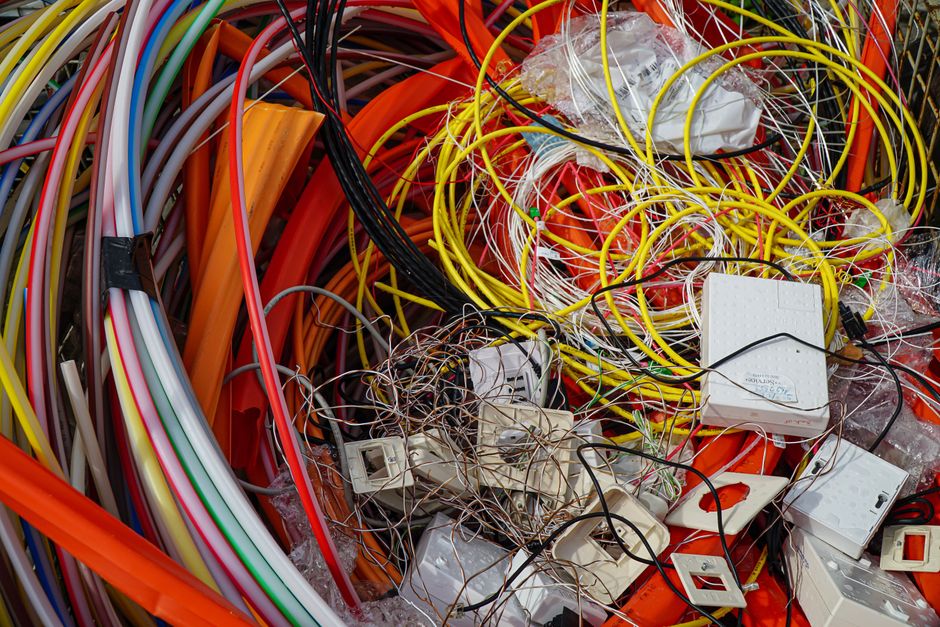
Every cheap gadget sold in Ireland eventually becomes someone's problem. Right now, that problem lands on the consumer, then the bin, then a container ship to a processing facility in West Africa. Irish retailers are paying to make that happen and calling it compliance.
That framing is wrong, and the businesses that change it first will have a structural advantage over the ones still treating e-waste as a line item on the P&L.
The Scale of What We Are Throwing Away
The EU's own data shows Ireland generated roughly 170,000 tonnes of electrical and electronic waste in 2023. To picture that: it is the equivalent of stacking a full container lorry of discarded devices every single working day of the year. Smartphones, earbuds, cheap Bluetooth speakers, fast-charging cables that stop working after six months. The category that is growing fastest is also the cheapest and the hardest to collect: small consumer electronics, the stuff that falls down the side of a sofa and gets thrown in general waste.
WEEE Ireland, the national compliance scheme, collected around 47,000 tonnes in 2023. The gap between what was generated and what was formally collected is not a rounding error. It is a market.
The driver of that gap is fast tech. The same economic logic that built fast fashion built a fast tech economy in Ireland: low upfront price, short replacement cycle, no clear end-of-life plan. The average Irish household now replaces a smartphone every 2.3 years. Multiply that across 1.8 million households and you have a device churn rate that no retailer currently has a business model built around.
Compliance Is the Floor, Not the Ceiling
Every retailer selling electronic goods in Ireland has a legal obligation under the WEEE regulations. Take back is not optional. The question is whether you treat that obligation as a cost of doing business or as the front end of a new revenue stream.
The retailers treating it as a cost have a collection point near the door that nobody uses. The retailers treating it as a revenue stream look more like Currys, which built a certified trade-in and refurbishment operation that now generates margins on returned stock that they never captured on the original sale. A refurbished iPhone 14 sold through a verified channel carries 30 to 40 percent better margin than a new iPhone 14 sold in a price-competitive market.
That is the binary Irish retailers need to face: compliance as a cost centre or circular economy business model as a profit centre. The EU's Right to Repair directive, which Ireland is now transposing, will make the second option more financially attractive and the first option more legally exposed.
A Four-Step Framework for Turning E-Waste Into a Business Model
The order of these steps matters. Most retailers try to start at Step 3 and wonder why it does not work.
Step 1: Grade and collect. Build a collection infrastructure with a grading process attached. Not a bin. A grading process. Devices arriving at your counter get assessed on the spot: working, repairable, or material-only value. This is the data layer everything else runs on. Without it you are managing waste. With it you are managing inventory.
Step 2: Segment by value. Working devices go into a certified trade-in programme. Repairable devices go to a partner workshop or an in-house bench if volume justifies it. Material-only devices go to an accredited recycler. Each stream has a different margin profile. The mistake is treating them as one stream and pricing accordingly.
Step 3: Build the customer offer around it. Upgrade programmes, trade-in credits, extended warranty bundles on refurbished stock. The consumer offer is not "recycle your old phone." It is "your old phone is worth something here." Scarcity, not charity. A device with a certified grade and a 12-month warranty commands a price. A box labelled "e-waste" does not.
Step 4: Report it as a revenue line. When e-waste processing shows up in your management accounts as a cost, your instinct is to minimise it. When refurbished device sales show up as a margin line, your instinct is to grow it. Accounting shape drives business behaviour. Change the shape.
The Window Is Narrower Than It Looks
The EU's Ecodesign for Sustainable Products Regulation starts tightening product standards from 2025 onward. Manufacturers will be required to supply spare parts for longer, which means repair economics improve and the refurbished market deepens. The retailers already operating a trade-in and resale model when that shift arrives will have the supplier relationships, the grading infrastructure, and the customer trust already built.
The retailers who wait will find themselves buying into a more crowded market at a higher build cost. The device leasing model that Apple is already running through its upgrade programme is the direction the large players are heading. Irish retailers who do not build their own circular offer will eventually become collection points for someone else's circular business.
The fear is real: building a refurbishment operation takes capital, operational change, and new skills. A repair bench, a grading system, a certified resale channel. None of that is free. But the comparison is not between the cost of building this and zero. It is between the cost of building it now and the cost of building it in three years when the regulation has tightened and three competitors have already done it.
What Producers Know That Retailers Are Slow to Learn
A producer looks at 170,000 tonnes of annual e-waste and sees recovered materials, refurbished inventory, and a customer relationship that outlasts the original sale. A retailer looks at the same number and sees a compliance headache.
Irish retailers built a serious grocery and fashion sector by learning to operate closer to the supply chain than their competitors. The same logic applies here. The device you sold 18 months ago is not gone. It is in a drawer in Lucan or a recycling bin in Cork, and it is worth something to someone. The business that builds the system to capture that value will not be competing on price. It will be competing on a model its rivals have not built yet.
Cheap is not a strategy. Circularity is.