How SIS Pitches Became the Official Surface Behind World Cup Glory.An Irish Tech Export Story
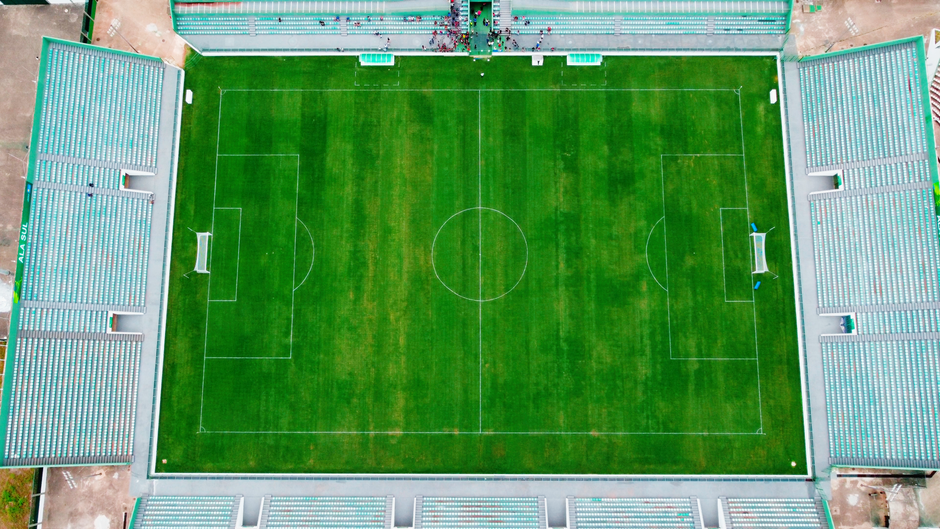
The pitch is the last thing anyone thinks about and the first thing that decides the game. SIS Pitches, headquartered in Limerick, figured that out early and built a company around it.
When FIFA awarded SIS the contract to supply hybrid playing surfaces for the 2022 World Cup in Qatar, it was not a lucky break. It was the result of a deliberate, two-decade build from a business that understood a simple truth: if you own the most critical piece of infrastructure in the world's most watched sport, you do not compete on price. You compete on proof.
What SIS Pitches Actually Does
SIS Pitches designs, installs and maintains hybrid grass playing surfaces. Hybrid means natural grass interwoven with synthetic fibres, typically around 20 million stitched strands per pitch, which gives the surface the feel of real grass and the durability of artificial turf. A standard natural grass pitch at elite level needs replacement several times a season under heavy use. A hybrid surface can handle three times the playing hours before it shows meaningful wear.
That is the product. The market is every serious sports organisation in the world that needs a pitch to look perfect on a broadcast watched by hundreds of millions of people. The fear is turf failure on the day that matters most.
Qatar 2022 was watched by a cumulative global audience of five billion people across the tournament. Every tackle, every goal, every stumble happened on a surface that SIS specified, installed and signed off on. That is not a marketing talking point. That is the most demanding quality test in sports infrastructure, run in 40 degree heat, on behalf of the most commercially sensitive sporting event on earth.
The Three-Step Export Playbook
SIS did not wake up one morning and pitch FIFA. The path followed a logic that any Irish B2B exporter should be able to trace.
Step 1: Build a reference portfolio at home. SIS spent years installing pitches across the League of Ireland, the GAA and Irish rugby. These are not glamorous contracts. They are proof-of-concept at scale. Every pitch that survived a muddy January in Connacht was evidence for a conversation with a procurement officer in Manchester or Madrid.
Step 2: Move up the credibility ladder, not sideways. The company targeted the English Premier League and European club football before going near international governing bodies. The Premier League alone has 20 clubs, each with multiple training and match pitches, and each one is a visible reference that FIFA can look at before signing anything. By the time SIS was in conversation with FIFA, it had installed surfaces at clubs including Arsenal and Tottenham Hotspur. That is a reference list that closes doors for competitors more than it opens doors for SIS.
Step 3: Align the product to the buyer's actual fear. FIFA's fear is not cost overrun. It is broadcast embarrassment. A pitch that tears up under the cameras during a World Cup semi-final is a reputational catastrophe that no insurance policy covers adequately. SIS priced itself as a risk solution, not a construction contractor. That is the difference between winning a tender and being the cheapest bid that almost won.
The Numbers Behind the Surface
The global sports infrastructure market is valued at roughly $25 billion annually. Hybrid pitch technology is a growing segment within it, driven by the expansion of stadium-grade facilities across Asia, the Middle East and North America. Qatar alone spent an estimated $200 billion on World Cup infrastructure, a figure roughly equivalent to Ireland's entire annual GDP. SIS's slice of that was the bit that actually touched the players.
Closer to home, Irish sports tech is already punching above its weight at global events, but SIS represents something specific: a manufacturing and installation business, not a software play, winning at the highest level. That matters because too much of the conversation about Irish exports defaults to software and pharma. SIS is a company that makes things, ships things and installs things in stadiums, and it is winning global contracts on technical merit.
Producer vs Passenger
There are two ways an Irish company can relate to a global sporting event. The passenger buys the jersey, watches the match and calls it good craic. The producer supplies the pitch, trains the crews, specifies the materials and invoices the organising committee.
SIS chose producer. That choice meant investing in R&D for hybrid technology when most competitors were still treating pitch installation as a commodity groundworks job. It meant building a workforce with specialist skills that could be deployed internationally. It meant accepting that the sales cycle for a World Cup contract is measured in years, not quarters, and that the margin on losing is zero.
The fear is real. International B2B contracts of this scale require warranties, performance bonds, mobilisation of staff across borders and the ability to deliver in conditions your home market never trained you for. Forty degrees in Qatar is not the same as a February morning in Limerick. The opportunity is equally real: one World Cup contract is worth more in future tender conversations than a decade of regional work.
What Irish Exporters Can Take From This
The SIS story is not about being small and plucky. It is about a company that identified a specific, high-stakes problem, built proprietary capability around it and then followed the credibility ladder until it reached the top of the market.
The lesson is not unique to pitches or sports. It applies to any Irish B2B company looking at international markets: find the buyer whose biggest fear you can eliminate, build the proof stack that makes you the obvious choice, and price accordingly. Cheap is not a strategy at a World Cup.
The pitch under your feet at the next major final is Irish. Build something worth standing on.