Why Ireland's Space Sector Could Be the Next Startup Goldmine (And How to Position Yourself)
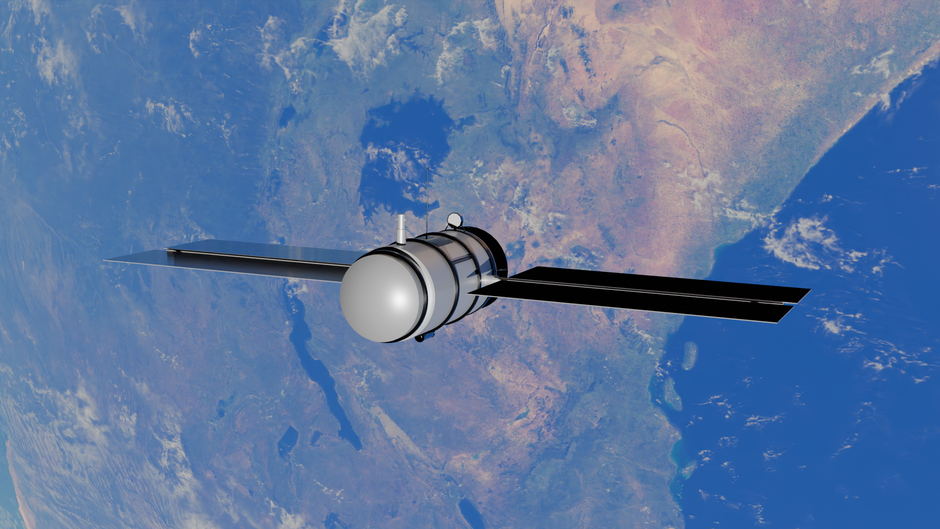
The next wave of Irish deeptech investment is not in AI infrastructure or medtech. It is 400 kilometres above your head.
Ireland's space economy is small by global standards but moving fast. The country currently contributes roughly €23 million annually to the European Space Agency, a figure the government has committed to growing. That is not charity. ESA membership is a procurement mechanism. Every euro Ireland puts in generates contracts for Irish companies, and right now the pipeline is underfilled relative to the opportunity. The founders who understand that dynamic today will be signing contracts when everyone else is still reading the press releases.
The Structural Shift That Makes This Real
Two things are converging at once. First, the cost of getting to orbit has collapsed. SpaceX's Falcon 9 has driven launch costs from roughly $54,000 per kilogram in the early 2000s to under $3,000 today. That is not a marginal improvement. It is the difference between space being a government monopoly and space being a commercial platform. Second, demand from the ground up has exploded. Agriculture, insurance, logistics, telecoms, and defence all now depend on satellite data in ways they simply did not ten years ago. The customer base is already there. The question is who builds the products on top.
Ireland's position is genuinely useful here. The country has a 40-year track record with ESA, a network of university research groups in UCD, UCC, and Maynooth with active space programmes, and a government that has identified the sector as a priority under the National Space Strategy. Enterprise Ireland runs a dedicated space programme. The IDA has attracted satellite operators. The raw ingredients exist. What is missing is founders willing to treat this as a commercial territory rather than an academic curiosity.
Where the Actual Opportunities Sit
This is not one market. It is five distinct ones, and a founder who picks the wrong one wastes three years.
1. Earth observation analytics. Satellites are generating more imagery than anyone can manually process. The opportunity is not building a satellite, which requires capital most Irish startups cannot raise. The opportunity is building the software layer that turns raw data into a decision. A farmer in Tipperary does not want a satellite image. He wants to know which field is water-stressed and by how much. An insurance company in Dublin does not want pixels. It wants a flood-risk score it can price a policy against. The data exists. The intelligence layer does not, not at the level of precision that commercial buyers will pay for.
2. Space cybersecurity. Every satellite communicates. Every communication is an attack surface. Ground station software, uplink encryption, and satellite command authentication are all weak points that government and commercial operators are starting to take seriously. Irish security firms are already building credibility as European AI gatekeepers, and that reputation transfers directly to the space cybersecurity brief. A founder with a background in network security who is willing to learn the satellite communications stack has a serious advantage here.
3. In-orbit services. Satellites break, drift, and run out of propellant. Servicing them in orbit is cheaper than replacing them, but the tooling barely exists. Ireland's precision engineering base, the same cluster that feeds the medtech sector, is capable of producing components for robotic servicing arms, docking mechanisms, and proximity sensors. This is hardware, which means longer development cycles and higher capital requirements. But it also means higher barriers to entry and longer contracts once you are qualified.
4. Downstream data products for regulated industries. Aviation, maritime, and financial services all consume space data and all operate under regulatory frameworks that make switching costs high. A startup that builds a compliance-grade data product for one of these verticals, and gets certified, becomes very difficult to displace. The sales cycle is long. The customer lifetime value is substantial.
5. Ground infrastructure software. Someone has to manage the ground stations, the data downlinks, the scheduling, and the spectrum coordination. This is an unglamorous but essential layer, and it is currently served by a small number of legacy providers with software that looks like it was designed in 2004, because most of it was.
The Funding Stack Available Right Now
Irish founders in this sector have access to a tiered funding structure that most other countries cannot match. Enterprise Ireland's competitive feasibility and innovation voucher schemes are the entry point. ESA's Business Incubation Centres, one of which operates through the ESERO Ireland network, provide direct programme funding for early-stage companies. Horizon Europe has dedicated space calls worth hundreds of millions across the programme period. And the European Investment Bank has started writing larger cheques into climate observation and space infrastructure.
Irish founders looking beyond VC for capital-intensive deeptech have real options in debt and grant structures that most early-stage advisors do not even mention. The space sector runs heavily on non-dilutive funding, and a founder who learns that system before raising equity preserves a lot of ownership.
The honest caveat is that the qualification cycles for ESA and defence-adjacent contracts are slow. A company that starts the process today might be generating revenue from it in 24 to 36 months. That is a cash flow problem for companies without bridge funding. The founders who survive it will not be the ones with the best technology. They will be the ones who structured their early revenue correctly.
How to Position Yourself: A Four-Step Approach
The order here matters. Skipping step one means building a product nobody in the industry will trust.
Step 1: Get embedded in the technical community first. Attend ESA's industry days. Join the Irish delegation to the Paris Air and Space Show. These are not networking events in the conference-badge sense. They are procurement conversations in disguise, and they tell you what problems are actually unsolved.
Step 2: Pick a downstream customer before you pick a technology. The farmer, the insurer, the port operator. Validate that they will pay before you spend two years on the space-facing component of your stack.
Step 3: Apply for ESA's BIC programme early. The incubation benefit is secondary. The primary benefit is the ESA association on your pitch deck, which signals to European institutional investors that you have passed a technical credibility filter.
Step 4: Build toward a defined certification or standard. ISO 27001 for security products. EASA qualification for aviation data. The certification is not red tape. It is the moat that keeps a better-funded competitor from simply copying your product and eating your customers.
The Honest Risk
The Irish space sector is real and the opportunity is real. It is also early enough that the companies building here will spend two years educating customers before they start closing deals. The producer posture is correct. Scarcity of qualified vendors is real. The risk is that early-stage founders underestimate the sales cycle and run out of runway before the contracts arrive.
Build your cash bridge before you need it. The sector rewards the prepared.
Ireland has always punched above its weight when it picked a sector and committed to it. The space economy is the next bet worth making.