The women-first recruitment bet: Why Dublin Bus is betting on part-time drivers when the industry needs scale
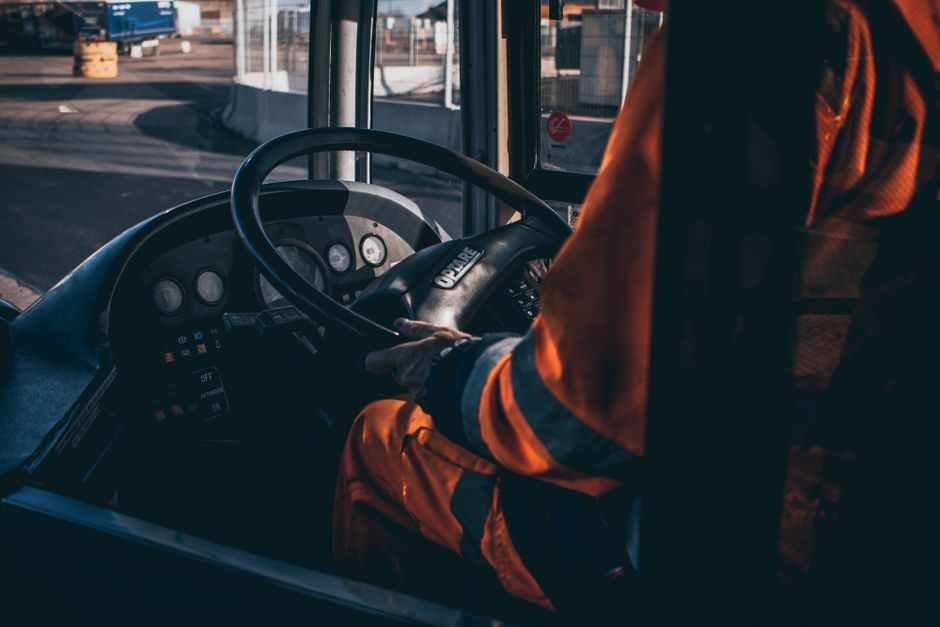
The transport industry has a driver shortage. Its answer, for thirty years, has been to look harder for the same person it always hired. Dublin Bus is trying something different.
The National Transport Authority's own figures show Ireland needs to add thousands of public transport journeys per week to meet existing demand, let alone the targets baked into the Government's BusConnects programme. Dublin Bus runs roughly 145 routes across the capital. Driver availability, not bus availability, is the binding constraint on expanding that network. You cannot run more buses than you have people to drive them. That is the whole problem, stated plainly.
The answer most operators reach for is pay. Raise the rate, run the ad, fill the seat. Dublin Bus is doing something more structurally interesting. It has built a targeted campaign to recruit women drivers, specifically by redesigning the working patterns around which women have historically been excluded from the role. That is not a diversity statement. That is a workforce supply strategy.
Why the existing pool is nearly fished out
Transport is one of the most gender-segregated industries in Ireland. Women make up roughly 15% of professional drivers across the European Union. In heavy vehicle and PSV categories, the figure is lower. The conventional explanation is preference. The honest explanation is structure. Split shifts, early morning starts, and unpredictable finish times are not neutral inconveniences. They land disproportionately on the parent doing school runs, the carer managing appointments, the person whose domestic load does not disappear because the roster says so.
Dublin Bus clocked this. The women-first recruitment push, run in partnership with its driver training pipeline, is built around part-time and flexible contracts from day one rather than treating flexibility as an exception you negotiate for after years of service. That sequencing matters. The 2026 Recruitment Paradox: Why Flexibility Isn't Enough When Three-Quarters of Workers Want Out identifies exactly this pattern across Irish employers: flexibility offered as a retention afterthought rather than a recruitment front foot. Dublin Bus is flipping the order.
The four-part logic of the women-first model
The strategy works on four levels, and the order of the logic matters.
1. Expand the addressable talent pool. If you recruit from a pool that is 85% male by convention rather than by necessity, you are ignoring nearly half the working population. The moment you redesign the role to fit more lives, the pool doubles in theory. Even capturing a fraction of that uplift changes your numbers.
2. Reduce the attrition cost. Training a PSV (Public Service Vehicle) licence holder costs time and money. Estimates in the Irish market put the full cost of training and onboarding a new bus driver, including the CPC qualification, at somewhere between €5,000 and €8,000 per person. Hire someone whose life circumstances will eventually force them out of a rigid full-time role, and you absorb that cost repeatedly. Build the role around their life from the start, and you hold onto trained drivers longer.
3. Part-time is not a concession, it is a scheduling asset. A full-time driver costs more in base salary and is harder to schedule across peak demand windows. A pool of part-time drivers who want morning or afternoon blocks maps directly onto the demand shape of urban bus networks, where rush hour is the product and quiet afternoons are the cost. Counterintuitively, more part-time drivers can give a scheduler more useful hours, not fewer.
4. Signal changes culture faster than policy does. When Dublin Bus runs a campaign that shows women in the cab, not in the office, it changes who applies. Representation in advertising is not sentiment. It is a recruitment mechanic. The population that sees itself reflected in the role is the population that picks up the phone.
What the industry gets wrong about scale
The standard operator objection to part-time flexibility is scale. You need full-time drivers to run a reliable network. You cannot build a timetable on fragmented availability. That argument holds when part-time is an exception bolted onto a full-time system. It collapses when part-time is designed into the scheduling architecture from the beginning.
Aer Lingus, to use a direct Irish comparison, runs a cabin crew model that has long relied on part-time and variable-hours contracts precisely because the demand pattern of aviation requires it. The flexibility is not a weakness in the model. It is the model. Bus networks have peak demand at 7am to 9am and 4pm to 7pm. A driver who works those windows full-time, five days a week, is more valuable to the schedule than a full-time driver whose hours spill into the quiet midday period that needs no extra capacity.
Why Irish Workers Are Stuck in Dead-End Jobs Despite Wanting Out: The Hidden Barriers makes the point that Irish employment structures punish people who need non-standard arrangements, not because the work cannot be done differently, but because the administrative systems were never rebuilt to accommodate it. Dublin Bus is doing the harder thing: rebuilding the system, not just the rhetoric.
The thing that could still go wrong
Targeted recruitment without structural follow-through is marketing. If women join Dublin Bus on the promise of flexible work and then find the actual roster managed by a depot culture that treats part-time as second-tier, the campaign will produce churn rather than retention. The metric to watch is not applications or even hires. It is two-year retention of female drivers versus the historical average for male recruits. That is the number that proves whether this is a workforce strategy or a press release.
The opportunity is real and the fear is legitimate. Ireland needs more public transport capacity. The people who could deliver it have largely been locked out by how the work was packaged. Dublin Bus is not being generous. It is being rational.
Build the role around the worker. The worker will build the network around the city.