When the Drought Hits Your Balance Sheet: How Irish Farmers Are Using Climate Stress Tests to Refinance
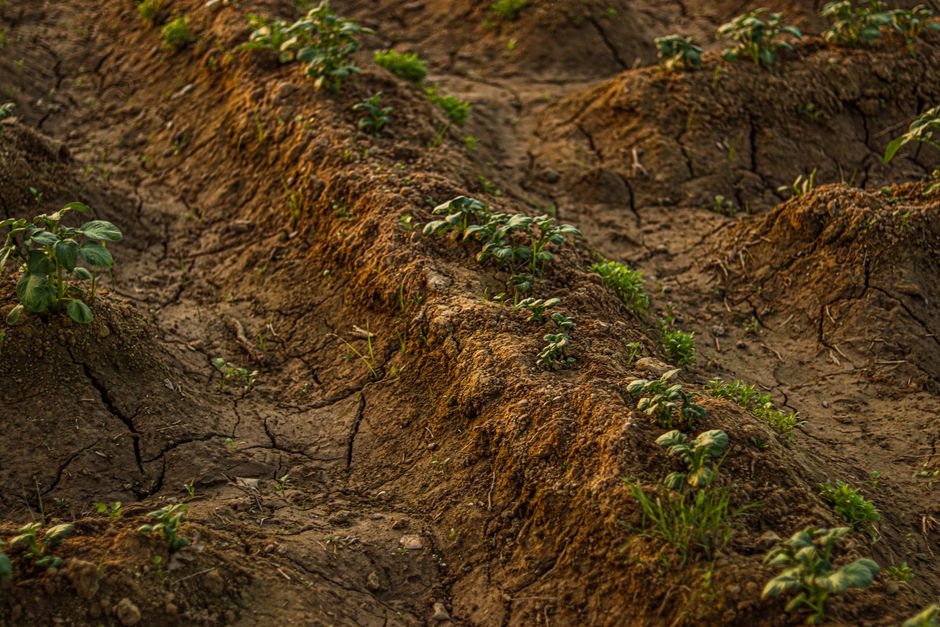
A bad summer tells you more about a farm business than three years of good accounts ever will.
This year's drought conditions across Ireland exposed something that farm accountants and agricultural lenders had been politely ignoring for too long: stocking rates set during wet years don't survive dry ones. When grass stopped growing in June and July, farms carrying 2.4 livestock units per hectare found themselves buying feed at peak prices, drawing down overdrafts, and in some cases selling stock into a market where every neighbour was doing the same thing. The price signal was brutal. The liquidity problem was real.
The opportunity, oddly enough, is also real. The farms that come through this with a credible story to tell are now in a stronger position with lenders than they were before the drought started.
What Lenders Are Actually Looking At Now
Agricultural lending in Ireland has always centred on land value as security and repayment capacity based on gross output. A 100-acre dairy farm with a milk contract and a Teagasc Profit Monitor showing a margin above €500 per hectare could get money. That was the formula.
The drought has forced a second question into the conversation: what does this farm look like in a bad year? That is a climate stress test, even if nobody in the credit committee is calling it that yet. AIB's agri division and Bank of Ireland's agricultural finance teams are both asking farmers to model feed costs under a scenario where grass growth falls 30% below the 30-year average. That is not a theoretical exercise anymore. That is last summer.
The farms that can answer the question with numbers rather than confidence are the ones getting refinancing terms that reward them. A farm in Tipperary that had already built a feed reserve policy, documented its stocking rate decisions, and kept a record of its cost per livestock unit carried was able to show its lender a business that had planned for stress. It drew less on its facility than neighbouring farms and was able to refinance an equipment loan at a rate 0.4 percentage points below the original offer. That gap, on a €120,000 loan over seven years, is worth just under €3,400. Not enormous. But it tells you which way the wind is blowing.
The Stocking Rate Binary
There are two types of farms coming out of this summer. The first carried animals at a rate justified by peak grass production and got caught when production fell. The second had built a margin between carrying capacity and actual stock numbers, giving themselves room to absorb the shock without emergency purchases.
The second type is not necessarily the more conservative operator. Many of the best-run farms in Munster and Leinster run tight margins on paper because they invest the headroom into infrastructure, water systems, and soil health rather than extra stock. That investment shows up in resilience, not in output figures, which is exactly why traditional lending models missed it.
Agri-tech startups are now building tools specifically designed to capture this kind of operational data in a format that lenders can read. Stocking rate histories, grass growth records linked to Met Éireann rainfall data, and feed purchase logs cross-referenced against market prices. A farm with two years of that data is presenting itself as a managed business, not just a family holding.
A Four-Step Framework for Climate Stress Testing Your Farm Finance
The order here matters. You cannot build a credible stress test without first knowing what your baseline actually is.
Step 1: Establish your real carrying capacity. Not what the land did in 2021, which was a good grass year. What it did in 2018 and again this summer. Teagasc's Pasture Base Ireland platform holds grass growth data by region going back several years. Use it. Your carrying capacity is a range, not a single number.
Step 2: Price your downside. If grass growth falls 25%, calculate the additional feed cost at today's prices. A 60-cow dairy herd needing an extra six weeks of silage and meal can easily face an additional outlay of €18,000 to €22,000. Put that number in writing before the lender asks for it.
Step 3: Map your liquidity buffer. What overdraft headroom exists, and how many months of operating costs does it cover in a stress scenario? Lenders now want to see a minimum of three months. Farms with a single facility tied to land are being encouraged to split their borrowing between term loans and a revolving credit line, keeping the revolving element clean for exactly this purpose.
Step 4: Document your management response. This is the part most farmers skip, and it is the most valuable. When the drought hit, did you reduce stock in May before prices fell further, or did you hold and absorb the cost? Either decision can be right, but showing that you made a decision deliberately, based on defined triggers, tells a lender you are running a business and not reacting to weather.
The Refinancing Window Is Open, Briefly
Rising interest rates have already reshaped how Irish lenders price risk across every sector. In agricultural lending, the risk premium attached to farms with no documented resilience strategy is widening. The farms that can present a climate stress test alongside their standard accounts are being treated differently, not because lenders have become environmentalists, but because the drought proved the model works.
That window will not stay open. Within two or three years, the documentation standards will be formalised, either through the European Banking Authority's agricultural credit guidelines or through Teagasc's own advisory frameworks. What is currently a voluntary differentiator will become a baseline requirement. The farms that build the habit now will be ahead. The ones that wait will be complying, not leading.
A farm that can prove it plans for drought is not just a better credit risk. It is a more valuable business, full stop. The land does not change. The management of what happens on it is the only variable a lender can actually back.