The Keogh's Crisp Gamble: How a Family Business Bet €50M on Production in a Consumer Slump
Building a factory when consumers are nervous takes a particular kind of nerve. Or a very clear read on where demand is actually going.
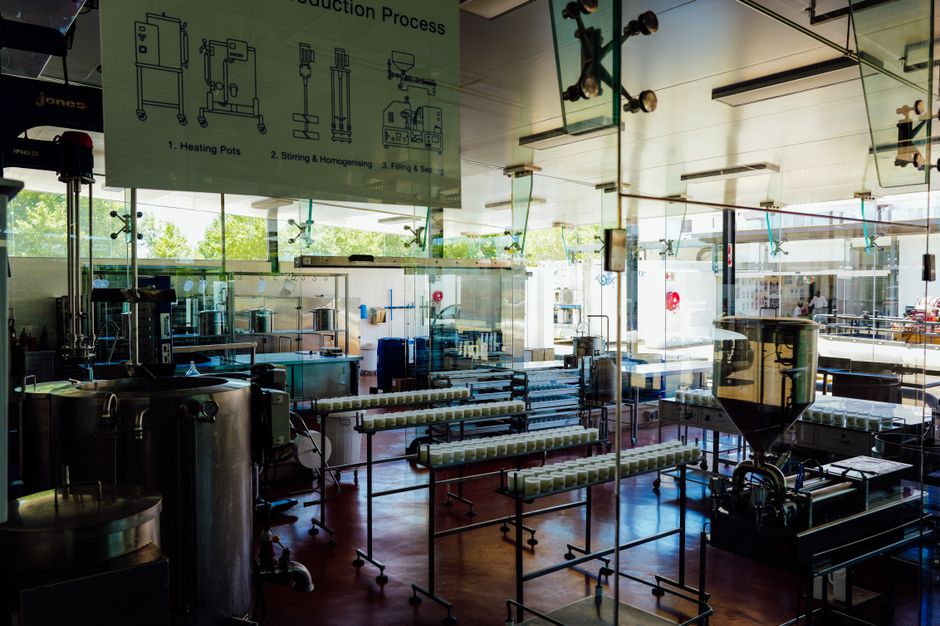
Keogh's Crisps, a family business from Oldtown in north County Dublin, is midway through a €50 million investment in a new production facility in Balbriggan. That is not a figure you arrive at by accident. For context, €50 million would buy you roughly 140 three-bed semis in Swords at today's prices. The Keogh family is putting that into bricks, ovens, and belts at a moment when the ESRI is flagging softening consumer sentiment and every other food brand is watching its promotional budget like a hawk.
So the question is not whether this is bold. It is whether it is smart.
The Counterintuitive Logic of Building in a Slump
The entrepreneur and the employee read a downturn differently. The employee sees falling confidence and cuts spending. The entrepreneur sees falling confidence and asks what happens on the other side of it.
Consumer slumps do not eliminate demand. They compress it and redirect it. People eating out less frequently do not stop eating. They shift spend toward at-home consumption, toward affordable treats, toward snacks that cost €2.50 a bag rather than €14 for a starter in a restaurant. The trade in food economics is well documented. During the 2008 recession, snack and confectionery categories held up significantly better than discretionary food spend in foodservice. Keogh's is betting the same dynamic plays out again, and they are probably right.
The Balbriggan facility, when fully operational, will give Keogh's the capacity to move beyond its current output ceiling and compete seriously on export volume. The Irish market alone, at roughly five million people, is a ceiling. If you are making a premium crisp with genuine provenance credentials, your real market is the Irish diaspora in Britain, the speciality food buyer in Germany, and the American consumer who pays a premium for anything with a county name on the packet.
The Three-Stage Logic of a Capital Bet Like This
There is a sequence to a move like this, and the order matters.
Stage one: Saturate the domestic base. Before you build for export, you need domestic volume that covers your fixed costs. Keogh's has done this. Their crisps are in every major multiple, every Centra and Spar, and in a significant chunk of the foodservice and airline catering channels. The home base is stable income, not exciting growth.
Stage two: Build the asset before the window closes. Construction costs, planning timelines, and equipment lead times mean that if you wait until consumer confidence is at its peak, you are building at the top of the cycle. You commission during the trough, you open when the recovery is running. The Balbriggan facility is likely to be producing at scale around the time Irish household sentiment turns positive again. That is not luck. That is sequencing.
Stage three: Use provenance as a price floor, not a story. This is the part most Irish food brands get wrong. They invest in the brand narrative, win awards, get a shelf in a London deli, and then compete on price when a larger player undercuts them. Keogh's has built enough brand equity, particularly in the British market where Irish food provenance carries genuine pull, to hold a price point. Producer versus consumer thinking applies here. The producer asks: what can I build that cannot be easily replicated at a lower price? The Keogh farm, the family name on the packet, the specific potato varieties, these are not marketing decorations. They are barriers to substitution.
What the Numbers Are Actually Saying
Irish Manufacturing as a sector is not as fragile as the headlines suggest. IDA Ireland figures show food and drink manufacturing remains one of the most employment-stable sectors in the country, with better retention rates than either pharma or tech services during downturns. That is partly because food does not go offshore in the way software development can.
The €50 million figure for Keogh's breaks down roughly as follows across a project of this scale: land and construction will account for the largest share, industrial food-grade facilities require significant fit-out, specialist frying and seasoning equipment runs to several million per line, and compliance with both Irish and EU food safety standards adds cost that a new entrant would find prohibitive. That last point matters enormously. The Balbriggan plant, once certified and operational, represents a barrier that a competitor would need years and similar capital to replicate. Small Irish businesses that are quietly outperforming larger rivals tend to share exactly this quality: they invest in physical or regulatory moats, not just marketing spend.
The Real Risk Is Not the Timing
The risk is not building in a consumer slump. Markets cycle. That is arithmetic.
The real risk is execution: getting the new facility to specification on time, maintaining product quality during a capacity ramp-up, and not overextending the sales pipeline before the production lines are reliable. Many Irish food businesses have stumbled at this exact point, winning a listing with a major UK retailer before their supply chain could guarantee consistent volume. A missed delivery to a Tesco or a Marks and Spencer buyer costs more than the margin on the order. It costs the relationship.
The Keogh family has been farming since 1796, which means they have a longer institutional memory than most of their competitors and most of their bankers. They understand that asset investment is a multi-decade decision, not a quarterly one. The €50 million is not a bet on the next eighteen months. It is a bet on where Irish food exports sit in 2030 and beyond.
The Broader Lesson for Irish Manufacturers
The Keogh's move is a case study in preferring demand creation to discounting. In a tighter consumer market, the weak response is to cut your margin to hold volume. The strong response is to build capacity that gives you cost efficiencies at scale, so that when volume grows, your margin expands rather than contracts.
Capital investment during a slump is not comfortable. But comfort is the enemy of competitive position. Every competitor that pauses while Keogh's builds is gifting them a lead that will take years to close. Ryanair made a comparable call at Shannon when others were retrenching, and the strategic dividend was clear within two years.
The Keoghs are not gambling. They are reading the board and moving while others are waiting for certainty that will never come.
Certainty is for spectators. Capacity is for producers.